Reframing Harriet Tubman Biography | 2026 Cultural Commemorations, Historical Legacy, Activism Influence & Global Resonance Spotlight

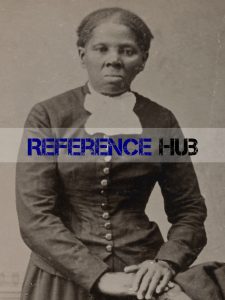
Harriet Tubman was born around March 1822 in Dorchester County, Maryland, United States. Her birth name was Araminta Ross, and she grew up in slavery under harsh conditions. Her parents were Harriet Green and Ben Ross. She had little formal education but learned strength, survival, and faith from her family and community. These early experiences shaped her determination to seek freedom.
In 1849, she escaped slavery and traveled to Pennsylvania, gaining her independence. She changed her name to Harriet Tubman, taking her mother’s name. After securing her freedom, she dedicated her life to helping others escape. She became a conductor on the Underground Railroad, guiding enslaved people to safety through secret routes and safe houses. Her courage earned her the nickname “Moses” because she led many to freedom.
Harriet Tubman carried out numerous missions and rescued more than seventy enslaved individuals. She also gave instructions to many others who found their way to freedom. Her work was dangerous, but she never lost a single passenger. She showed remarkable leadership and bravery during a time of great risk.
During the American Civil War, she served the Union Army as a nurse, scout, and spy. In 1863, she led the Combahee River Raid in South Carolina, which freed more than seven hundred enslaved people. Her service made her one of the few women to lead a military operation during the war. After the war, she continued to fight for justice, supporting the women’s suffrage movement and speaking out for equal rights.
She married John Tubman before her escape, but the marriage ended when she left Maryland. Later, she married Nelson Davis in 1869, and together they adopted a daughter named Gertie. She settled in Auburn, New York, where she established the Harriet Tubman Home for the Aged, providing care for those in need.
Harriet Tubman lived modestly, relying on pensions and donations, but her success was measured by her impact on freedom and justice. She became a symbol of resilience and courage. Her achievements included not only freeing enslaved people but also serving her country and advocating for equality.
She died on March 10, 1913, in Auburn, New York. Her legacy lives on through monuments, schools, and institutions named in her honor. She is remembered as one of the most influential figures in American history. Her life story continues to inspire movements for justice and equality around the world.
Harriet Tubman Formative Experiences and Resilience in Maryland
Harriet Tubman began her life as Araminta Ross in the early 1820s within the marshy landscapes of Dorchester County, Maryland. As one of nine children born to Harriet Green and Benjamin Ross, her early years were defined by the brutal realities of chattel slavery. From a very young age, she was rented out to various households, where she performed grueling tasks such as checking muskrat traps in icy waters and serving as a nursemaid. These experiences were marked by physical hardship and frequent whippings, which instilled in her a profound sense of justice and an unbreakable will.
A pivotal moment occurred during her adolescence when she sustained a traumatic head injury. After refusing to help an overseer restrain an escaping man, she was struck by a heavy metal weight. This injury caused lifelong seizures and narcolepsy, which she interpreted as vivid, spiritual visions from God. These “sleeping spells” deepened her religious convictions and provided her with a sense of divine guidance. Her parents, particularly her mother “Rit,” provided what comfort they could, but the constant threat of family separation remained. These early trials in the American South did not break her spirit; instead, they forged the strategic mind and courageous heart of a future liberator.
Harriet Tubman Spiritual Growth and Unconventional Mastery of Survival
Harriet Tubman never sat in a traditional classroom, as formal education was strictly forbidden for enslaved individuals. Instead, she received a comprehensive education in survival, spirituality, and natural science from her environment and community. Her father, a skilled lumberman and timber estimator, taught her how to navigate the dense forests of the Eastern Shore. She learned to read the night sky, using the North Star as a permanent compass, and mastered the ability to move silently through swamps and woods. These practical skills were far more valuable for her future missions than any academic curriculum.
Her intellectual development was also deeply rooted in the oral traditions and religious faith of the enslaved community. She became an expert in human psychology, learning how to identify trustworthy allies and outsmart those who sought to capture her. Her spiritual education was equally rigorous; she viewed her frequent “visions” as direct communication with a higher power, which gave her the confidence to lead others through mortal danger. By the time she sought her own freedom, she had developed a sophisticated understanding of geography, botany, and logistics. This self-taught mastery allowed her to transform from a victim of a cruel system into a brilliant strategist and a beacon of hope for hundreds of others.
Harriet Tubman Daring Journey and Liberation via the Underground Railroad
In 1849, fearing she would be sold further south, Harriet Tubman made the life-altering decision to escape. She adopted the name Harriet, after her mother, and successfully navigated the arduous journey to Philadelphia alone. Upon reaching the North, she famously remarked that there was “such a glory over everything,” but she immediately felt the absence of her family. Rather than simply enjoying her own liberty, she became a “conductor” on the Underground Railroad, a secret network of safe houses and abolitionist activists. Over the next decade, she returned to Maryland approximately 13 times, personally escorting about 70 people to freedom.
She earned the nickname “Moses” because of her tireless commitment to leading her people out of bondage. Her missions were characterized by extreme secrecy and tactical brilliance. She often traveled during the winter months when the nights were longest and used various disguises to evade detection. Despite the passage of the Fugitive Slave Act of 1850, which made her work even more dangerous, she never lost a single “passenger” on her journeys. Her reputation grew among both abolitionists and enslavers, with the latter offering massive rewards for her capture. Through her work with the Underground Railroad, she became a living symbol of resistance and the most famous operative of the secret network.
Harriet Tubman Military Leadership and Intelligence Operations in the Civil War
When the American Civil War broke out in 1861, Harriet Tubman saw an opportunity to deal a final blow to the institution of slavery. She volunteered her services to the Union Army, initially working as a cook and a nurse in South Carolina. However, her unique skills as a scout and spy were quickly recognized by Union officers. She recruited a group of local scouts who provided critical intelligence on Confederate troop movements and ammunition supplies. Her ability to move unnoticed through rebel territory made her one of the most effective intelligence operatives of the conflict.
Her most historic achievement occurred on June 2, 1863, when she helped plan and lead the Combahee River Raid. This operation involved three federal gunboats and hundreds of soldiers from the 2nd South Carolina Colored Volunteer Regiment. Tubman used her knowledge of the river’s mines to guide the ships safely, resulting in the destruction of valuable Confederate storehouses and the liberation of over 700 enslaved people. This feat made her the first woman in United States history to lead an armed military assault. Despite her legendary service, she faced systemic discrimination after the war and struggled for decades to receive the government pension she rightfully earned as a veteran.
Harriet Tubman Post War Activism and Community Work in New York
After the conclusion of the Civil War, Harriet Tubman settled in Auburn, New York, on land she had purchased from Senator William H. Seward. Her home became a sanctuary for family members and other formerly enslaved individuals seeking a fresh start. In 1869, she married Nelson Davis, a veteran who had served in the United States Colored Troops. Together, they adopted a daughter named Gertie, and Tubman continued her lifelong mission of humanitarian service. She remained active in the African Methodist Episcopal Zion Church, which served as a hub for her social and political work.
In her later years, she became a passionate advocate for women’s suffrage, working alongside leaders like Susan B. Anthony and Elizabeth Cady Stanton. She traveled to conventions to speak about her experiences, arguing that her service to the country entitled her to the right to vote. She also focused on the welfare of the elderly and the indigent, eventually establishing the Harriet Tubman Home for the Aged on her property in 1908. Even as her own health declined, she remained dedicated to the care of others. Her life in Auburn was a testament to her belief that freedom was not just an individual achievement but a collective responsibility to support and uplift the most vulnerable members of society.
Harriet Tubman Enduring Success and Historical Significance in America
Harriet Tubman lived a life of modest means, but her success is measured by the immense impact she had on the course of American history. She transitioned from an enslaved woman to a world-renowned abolitionist, a military hero, and a civil rights pioneer. Her legacy is preserved through numerous monuments, schools, and historical sites, including the Harriet Tubman National Historical Park in New York and the Underground Railroad State Park in Maryland. Her image as a freedom fighter remains one of the most powerful and recognizable icons of the fight against oppression.
In recent years, the United States government has taken steps to further honor her by planning to feature her portrait on the twenty-dollar bill. This recognition would make her the first African American and the first woman in over a century to appear on U.S. paper currency. Her story continues to inspire modern movements for justice, equality, and human rights. She is remembered not only for her bravery in the face of danger but for her unwavering faith in the dignity of every human being. Harriet Tubman’s journey remains a profound example of how one individual’s courage can change the destiny of thousands and leave an indelible mark on a nation’s soul.
Harriet Tubman Age (Chronological Journey and Documented Life Span)
Harriet Tubman was born in March 1822 in Dorchester County, Maryland. Historical records indicate that Harriet Tubman age was 91 years at the time of her passing on March 10, 1913.
Harriet Tubman Husband (Marital Unions and Personal Relationship Records)
Harriet Tubman married her first husband, a free Black man named John Tubman, in 1844. Following her escape and his subsequent passing, she entered into a second marriage with Nelson Davis in 1869. Davis was a veteran of the Civil War who had served as a Union soldier. This second legal union lasted until his death in 1888.
Harriet Tubman Cause of Death (Final Medical Context and Health Conclusion)
Harriet Tubman died as a result of pneumonia. Her passing occurred on March 10, 1913, at her home in Auburn, New York. This respiratory infection was the primary medical factor in her death at an advanced age. No other contributing causes were officially documented by medical attendants at the time.
Harriet Tubman Nationality (National Identity and Allegiance to the State)
Harriet Tubman held American nationality throughout her life. She was born in the United States and served as a scout and spy for the Union Army during the American Civil War. Her identity is officially recognized as that of a prominent American abolitionist and social activist. Historical documentation consistently identifies her as a key figure in United States history.
Harriet Tubman Children (Adoptive Family and Private Domestic Bonds)
Harriet Tubman did not have any biological children. In 1874, she and her second husband, Nelson Davis, adopted a baby girl whom they named Gertie. This daughter was the only child officially raised by the couple at their home in Auburn, New York. Gertie appears in federal census records as their daughter and later lived a private life after marrying a man with the surname Watson.
Harriet Tubman Real Name (Original Birth Identity and Name Evolution)
Harriet Tubman was given the real name Araminta Ross at the time of her birth. She was also affectionately known by the nickname “Minty” during her childhood in Maryland. Around the time of her first marriage in 1844, she chose to change her first name to Harriet in honor of her mother. This transition resulted in the full legal name of Harriet Tubman which is recognized globally today.
Harriet Tubman Quotes (Notable Declarations and Powerful Oral Legacy)
Harriet Tubman is famously attributed with the statement, “I never ran my train off the track, and I never lost a passenger.” Another verified quote from her experiences states, “There was one of two things I had a right to, liberty or death; if I could not have one, I would have the other.” She also remarked on her arrival in the North, “I looked at my hands to see if I was the same person.”
Harriet Tubman Profile Table (Statistical Identity Overview and Core Data)
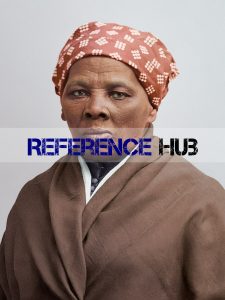
| Profile | Information |
| Harriet Tubman career | Abolitionist, Underground Railroad conductor, Civil War scout and spy, nurse, and suffragist |
| Harriet Tubman real name | Araminta Ross |
| Harriet Tubman age | 91 years |
| Harriet Tubman date of birth | c. March 1822 |
| Harriet Tubman net worth | Lived modestly; relied on a small government pension and community support |
| Harriet Tubman wife / spouse | John Tubman (m. 1844); Nelson Davis (m. 1869) |
| Harriet Tubman children | Gertie Davis (adopted) |
| Harriet Tubman parents | Ben Ross and Harriet “Rit” Green |
| Harriet Tubman religion | African Methodist Episcopal (AME) Zion |
| Harriet Tubman state of origin | Maryland |
| Harriet Tubman alma mater | Not known (No formal education) |
| Harriet Tubman education | Self-taught; expert in woodcraft, navigation, and herbal medicine |
| Harriet Tubman nationality | American |