Recontextualizing Rosa Parks Biography | 2026 Cultural Legacy, Global Influence, Media Presence & Historical Impact Spotlight

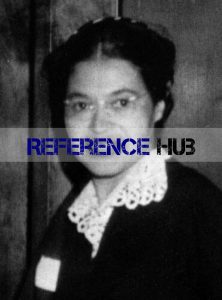
Rosa Parks was born on February 4, 1913, in Tuskegee, Alabama, United States. Her parents were James McCauley and Leona Edwards. She grew up in Pine Level, Alabama, where she learned strong values of faith and equality from her family. She attended Montgomery Industrial School for Girls and later Alabama State Teachers College, but she left school to care for her grandmother and mother. She developed skills as a seamstress, which became her profession for many years.
She began working in Montgomery and became active in the local chapter of the NAACP in the 1940s. She served as secretary and helped document cases of racial injustice. Her involvement in civil rights work grew steadily, and she became known for her quiet strength and determination.
On December 1, 1955, Rosa Parks refused to give up her seat to a white passenger on a Montgomery bus. Her arrest sparked the Montgomery Bus Boycott, which lasted more than a year and was led by Martin Luther King Jr. The boycott ended with a Supreme Court ruling that segregation on public buses was unconstitutional. Her act of defiance became a turning point in the civil rights movement.
Her achievements include receiving the Presidential Medal of Freedom in 1996 and the Congressional Gold Medal in 1999. She wrote books such as Rosa Parks: My Story and Quiet Strength, where she shared her experiences and beliefs. She co-founded the Rosa and Raymond Parks Institute for Self Development, which supported young people in leadership and community service.
Rosa Parks worked mainly in Montgomery and later in Detroit, where she continued her activism. Her success was not measured in wealth but in the impact she made on society. She became a global symbol of courage and justice.
She married Raymond Parks in 1932, and they remained together until his death in 1977. She did not have children but dedicated her life to helping others. She lived with humility and remained committed to equality until her final years.
Rosa Parks died on October 24, 2005, in Detroit, Michigan, at the age of 92. Her funeral was attended by thousands, and she was honored as one of the most important figures in American history. Her legacy continues to inspire generations to stand against injustice and fight for freedom.
Rosa Parks Academic Foundations and Performance Training
Rosa Parks embarked on an educational journey that was significantly shaped by the racial barriers of the early 20th century. Her initial learning occurred at home under the guidance of her mother, a teacher, before she enrolled in the Montgomery Industrial School for Girls. This private institution provided a rigorous environment where she not only studied traditional subjects but also honed her skills in needlework. She later continued her studies at the Alabama State Teachers College for Negroes, focusing on secondary education. However, her formal schooling was abruptly interrupted when she had to leave to care for her aging grandmother and later her ill mother.
Despite these interruptions, her commitment to self-improvement never wavered. She eventually returned to her studies and successfully earned her high school diploma in 1934, an achievement that was quite rare for African American women at the time. This educational background provided her with the literacy and analytical skills necessary for her future role as a strategic organizer. She also attended a transformative workshop at the Highlander Folk School in 1955, where she engaged in an integrated learning environment for the first time. This specific training in social justice and nonviolent protest became the intellectual bedrock for her activism.
Rosa Parks Professional Journey and Multimedia Career
The professional life of Rosa Parks was defined by her mastery as a seamstress and her unwavering commitment to social justice. For many years, she worked in the men’s shop at the Montgomery Fair department store, where she was the only Black woman employed in the tailoring department. This role required immense technical skill and a calm demeanor, traits that would later define her public image. Parallel to her career in the garment industry, she became a foundational member of the Montgomery chapter of the NAACP. Starting in 1943, she served as the branch secretary, a position that involved documenting countless cases of racial violence and navigating the complexities of voter registration.
After relocating to Detroit in 1957 following the bus boycott, her professional path expanded into the political sphere. In 1965, she was hired as an office assistant by U.S. Representative John Conyers, where she worked until her retirement in 1988. Her responsibilities included helping the homeless find housing and assisting constituents with various social services. She also transitioned into the literary world, co-authoring her autobiography and several reflective books that provided a voice to her “quiet strength.” Her career was a unique blend of skilled labor, administrative service, and profound advocacy, showing that professional work and activism could be seamlessly integrated.
Rosa Parks Personal Relationships and Family Life
Rosa Parks shared a life-long partnership with Raymond Parks, a politically active barber she married in 1932. Raymond was a pioneering activist in his own right, notably working with the NAACP and the defense committee for the Scottsboro Boys. Their marriage was a union of shared values, as he was the one who encouraged her to complete her high school education and supported her through the most dangerous periods of her activism. Although the couple never had biological children, they were deeply involved in mentoring the youth within their community. Rosa often spoke of her younger brother, Sylvester, and her maternal grandparents as central figures who instilled in her a sense of pride and a refusal to accept second-class citizenship.
After their move to Detroit, the family faced significant economic hardships and health challenges, yet they remained a cohesive unit. Following Raymond’s death in 1977, Rosa co-founded the Rosa and Raymond Parks Institute for Self-Development to honor his memory. She viewed the students and young activists she worked with as the “daughter she never had,” particularly through her close friendship with Elaine Eason Steele. Her personal life was characterized by a modest, disciplined lifestyle rooted in her African Methodist Episcopal faith. This strong familial and spiritual support system provided the emotional resilience she needed to endure years of harassment and public scrutiny.
Rosa Parks Media Breakthrough and Path to Fame
The rise to fame for Rosa Parks was not an accidental occurrence but the result of a deliberate, lifelong commitment to challenging inequality. While she had been an activist for over a decade, her global breakthrough came on December 1, 1955, when she was arrested for refusing to vacate her seat for a white passenger on a Montgomery bus. This singular act of civil disobedience was the catalyst for the Montgomery Bus Boycott, a 381-day protest that garnered international media attention. Her image as a dignified, hardworking seamstress became the perfect symbol for the movement, helping to mobilize 17,000 citizens in a collective fight for dignity.
This event transformed her into an overnight icon of the civil rights movement, often referred to by the media as the “Mother of the Civil Rights Movement.” Her quiet but firm refusal resonated with millions, leading to a landmark Supreme Court ruling that declared bus segregation unconstitutional. Despite losing her job and facing constant death threats, she utilized her newfound platform to travel the country and raise funds for the struggle. Her breakthrough showed the world that a single individual could challenge an entire legal system. This era established her as a permanent fixture in American history, shifting her identity from a local secretary to an international symbol of courage and resistance.
Rosa Parks Financial Success and Wealth Status
Rosa Parks maintained a lifestyle of modest means throughout her life, with her success measured by her social impact rather than her bank account. During the years of the Montgomery Bus Boycott and the immediate aftermath, she and her family suffered significant financial instability due to being blacklisted by local employers. After her move to Detroit, her employment with Congressman John Conyers provided a steady but modest income until 1988. At the time of her death in 2005, her net worth was estimated to be approximately $10,000. While she received royalties from her books, such as Rosa Parks: My Story and Quiet Strength, much of this income was funneled back into her charitable efforts and the maintenance of her institute.
Her financial status was a direct reflection of her commitment to her cause, as she often prioritized community development over personal gain. In her later years, she received numerous prestigious awards that brought significant recognition but did not necessarily translate into massive personal wealth. Her estate’s value lay primarily in her personal papers and historical artifacts, which were eventually acquired and preserved for public education. Her financial journey serves as a reminder of the economic sacrifices made by leaders of the civil rights era. She achieved a level of “success” that transcended traditional financial metrics, leaving behind a legacy that continues to generate immense cultural and educational value across the globe.
Rosa Parks Cultural Legacy and Modern Influence
The legacy of Rosa Parks is an indelible part of the global struggle for human rights and equality. She fundamentally changed the trajectory of American history by sparking a movement that led to the dismantling of legalized segregation. Today, she is remembered as a role model for nonviolent resistance and a symbol of the power of individual courage. Her influence is seen in the continued study of the civil rights movement in schools and the numerous memorials, libraries, and museums dedicated in her honor. She was the first woman to lie in honor in the United States Capitol Rotunda, a testament to her standing as a national hero.
Her modern influence extends to activists who continue to fight for racial justice and voting rights. The Rosa and Raymond Parks Institute for Self-Development continues her mission by empowering young people through leadership training and educational programs. She is often cited by contemporary leaders as an inspiration for “good trouble” and the importance of taking a stand, even when it is uncomfortable or dangerous. Her life story proves that a dedicated person can change the course of a nation. As future generations look back at the 20th century, her name remains synonymous with the moral authority required to demand justice. Her legacy is not just a historical footnote but a living blueprint for those who seek to create a more equitable world.
Rosa Parks Creative Achievements and Notable Works
Rosa Parks authored several significant works that allowed her to share her journey and her philosophy of “quiet strength” with the world. Her autobiography, Rosa Parks: My Story, provided a definitive account of the Montgomery Bus Boycott and her life as an activist. She also wrote Quiet Strength: The Faith, the Hope, and the Heart of a Woman Who Changed a Nation, which offered a deeper look into the spiritual and moral convictions that guided her actions. These literary contributions served to humanize her struggle and provide a roadmap for others seeking social change. Her writings are now part of the permanent collection at the Library of Congress, serving as vital primary sources for historians.
In addition to her writing, she was the recipient of the nation’s highest civilian honors. She was awarded the Presidential Medal of Freedom in 1996 and the Congressional Gold Medal in 1999, recognizing her “quiet courage” and its role in reshaping American society. She also received more than forty honorary doctoral degrees from various universities, acknowledging her contribution to the field of social ethics and human rights. Her work with the Rosa and Raymond Parks Institute can also be viewed as a major creative achievement, as it successfully developed the “Pathways to Freedom” program to educate youth about their heritage. These milestones demonstrate that her creativity was found in her ability to build institutions and narratives that sustained the fight for equality long after the boycott ended.
Rosa Parks Age (Historical Lifespan and Vital Chronology Framework)
Rosa Parks was born on February 4, 1913. She passed away on October 24, 2005. At the time of her death, the final Rosa Parks age was 92.
Rosa Parks Husband (Marital Union and Personal Support System)
Rosa Parks was married to Raymond Parks, a barber and civil rights activist. The couple wed on December 18, 1932, at her mother’s home in Pine Level, Alabama. Raymond Parks was born on February 12, 1903, and passed away on August 19, 1977. He remained her only husband until his death from cancer.
Rosa Parks Nationality (Civil Identity and National Heritage Context)
Rosa Parks was an American citizen. She was born within the United States in the state of Alabama. Her legal status as a national of the United States remained constant throughout her entire life.
Rosa Parks Children (Family Dynamics and Personal Lineage Chapters)
Rosa Parks did not have any biological children. She remained childless throughout her 45-year marriage to Raymond Parks. She was a dedicated aunt to her brother Sylvester’s thirteen children.
Rosa Parks Quotes (Famous Oratory and Memorable Wisdom Reflections)
One famous statement by Rosa Parks is: “The only tired I was, was tired of giving in.” Another significant quote from her is: “I have learned over the years that when one’s mind is made up, this diminishes fear; knowing what must be done does away with fear.” She also famously stated: “Stand for something or you will fall for anything; today’s mighty oak is yesterday’s nut that held its ground.”
Rosa Parks Profile Table (Essential Facts and Statistical Biography Overview)
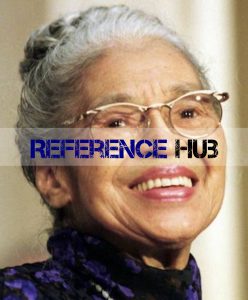
| Profile | Information |
| Rosa Parks career | Civil rights activist, seamstress, and author |
| Rosa Parks real name | Rosa Louise McCauley |
| Rosa Parks age | 92 |
| Rosa Parks date of birth | February 4, 1913 |
| Rosa Parks net worth | Approximately $10,000 (at the time of her death) |
| Rosa Parks wife / spouse | Raymond Parks |
| Rosa Parks children | None |
| Rosa Parks parents | James McCauley and Leona Edwards |
| Rosa Parks religion | African Methodist Episcopal (AME) |
| Rosa Parks state of origin | Alabama, USA |
| Rosa Parks alma mater | Alabama State Teachers College for Negroes |
| Rosa Parks education | Montgomery Industrial School for Girls and Alabama State Teachers College |
| Rosa Parks nationality | American |