Reconstructing Genghis Khan Biography | 2026 Cultural Legacy, Global Influence, Media Presence & Historical Impact Spotlight

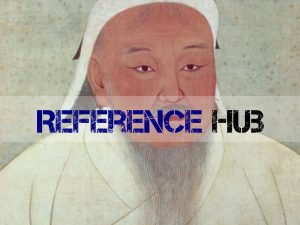
Genghis Khan was born around 1162 near the Onon River in Mongolia. His birth name was Temüjin. He was the son of Yesügei, a tribal chief, and Hoelun. His father’s death left his family in hardship, and he grew up facing struggles that shaped his strength and determination. He had no formal education but learned survival, hunting, and tribal warfare from an early age. He also gained knowledge of tribal politics and alliances, which later helped him unite the Mongol clans.
As a young man, Temüjin began building alliances and defeating rival tribes. In 1206, he was declared Genghis Khan, meaning Universal Ruler. From that point, he started expanding his influence across Central Asia. He conquered the Khwarezmian Empire, defeated the Jin Dynasty in northern China, and extended his campaigns into Persia and Eastern Europe. His leadership and military strategy made him one of the most powerful figures of his time.
Genghis Khan’s achievements included founding the Mongol Empire, which became the largest contiguous empire in history. He introduced a merit-based system for military and government positions, ensuring loyalty and efficiency. He also created laws known as the Yassa code to maintain order. His empire promoted trade and communication along the Silk Road, connecting distant regions and cultures.
His work was centered on warfare, governance, and diplomacy. He combined military strength with political skill, creating a system that allowed his empire to thrive. He married Börte, who remained his lifelong partner, and together they had several children, including Ögedei, Chagatai, and Tolui, who later played important roles in continuing the empire.
Genghis Khan’s success was measured not in wealth but in the vast lands he controlled and the influence he had on world history. His empire stretched from Asia to Europe, and his legacy shaped the future of many nations. He died in 1227, though the exact cause remains uncertain.
His descendants carried on his vision, expanding the Mongol Empire even further. Genghis Khan is remembered as both a ruthless conqueror and a visionary leader. His legacy lies in his military innovations, his empire building, and his role in connecting cultures through trade and communication. He remains one of the most influential figures in history, admired for his resilience, leadership, and impact on the world.
Genghis Khan Formative Years and Survival in the Steppes
Born near the Onon River around 1162, the boy who would become a legend was originally named Temüjin. His entry into the world was marked by a mysterious blood clot in his hand, which local folklore interpreted as a sign of a future leader. He was the son of Yesügei, a chieftain of the Borjigin tribe, and Hoelun. However, his privileged start was short-lived. When he was just nine, his father was poisoned by a rival Tatar faction, leaving his family vulnerable. The clan subsequently abandoned them, viewing a widow and young children as a burden. This forced Temüjin into a period of extreme destitution. His family survived by foraging for roots and fishing, a far cry from the typical nomadic diet of mutton. These hardships were transformative, teaching him the cold reality of tribal politics and the necessity of absolute self-reliance. It was during this desperate time that he killed his half-brother, Bekhter, in a dispute over resources, a move that solidified his position as the undisputed head of his household and signaled his future ruthlessness.
Genghis Khan Practical Wisdom and Mastery of the Wild
Genghis Khan never experienced a day of formal schooling in the way modern society understands it. He was illiterate throughout his life, never reading books or studying under traditional scholars. Instead, the vast and unforgiving Mongolian steppes served as his classroom. His education was entirely focused on the essential skills of survival, hunting, and warfare. From his mother, Hoelun, he learned the intricate art of tribal diplomacy and the vital importance of forming strategic alliances. He mastered the technicalities of horsemanship and archery, which were the twin pillars of Mongol military power. His training came through direct experience—surviving assassination attempts, escaping enslavement by former allies, and navigating the treacherous social landscape of the nomadic clans. This hands-on learning allowed him to develop a keen sense of military common sense and a psychological understanding of his enemies. He learned to value intelligence gathering and technological adaptation, qualities that would later allow him to dismantle much more established and “educated” civilizations.
Genghis Khan Early Unification and Political Emergence
The career of Temüjin began not as a king, but as a warrior seeking to reclaim his family’s lost honor. His first major political move was to seek out Toghrul, a former ally of his father and leader of the Kereit tribe. By presenting a gift of sable fur, he secured a vital alliance that provided him with the manpower needed to begin his ascent. He proved his military proficiency early on by rescuing his wife, Börte, from the Merkit tribe who had abducted her. As he grew in strength, he began to systematically unite the fractured Mongol tribes, using a combination of shared interest and brutal force. In a departure from ancient customs, he broke the traditional tribal hierarchy by appointing leaders based on loyalty and skill rather than noble birth. By 1206, his successful campaigns had brought all the nomadic tribes of Northeast Asia under his control. At a massive assembly known as a kurultai, he was officially proclaimed “Genghis Khan,” a title translating to Universal Ruler, marking the formal start of his historic reign.
Genghis Khan Expansion and Global Military Dominance
Genghis Khan rapidly expanded his influence far beyond the borders of Mongolia, targeting the sedentary civilizations that surrounded the steppes. He launched a series of devastating invasions against the Jin Dynasty in Northern China and the Xi Xia kingdom, utilizing innovative siege warfare techniques that the Mongols adapted from their captives. His fame grew significantly following his total destruction of the Khwarezmian Empire in Central Asia. This campaign was triggered by a diplomatic insult when the Shah executed his messengers. In response, Genghis Khan led an army of hundreds of thousands, erasing entire cities from the map and building a reputation for psychological warfare that terrified his contemporaries. His military machine was characterized by extreme mobility, with a flexible cavalry that could cover vast distances at speeds unmatched by any other army of the era. By the time his campaigns reached Eastern Europe and Persia, he had built a reputation as a strategist of genius who could exploit the political weaknesses of any state he encountered, turning the Mongol Empire into a global superpower.
Genghis Khan Administrative Innovations and the Yassa Code
Genghis Khan was much more than a conqueror; he was an architect of a sophisticated and orderly state. One of his most significant achievements was the establishment of the Yassa, a comprehensive and strict legal code that governed all aspects of Mongol life. This code promoted social cohesion by outlawing theft, fighting, and the abduction of women, while also providing clear rules for military discipline and the division of spoils. To facilitate communication across his vast territories, he created the “Yam,” an incredibly efficient postal network of relay stations that allowed messages to travel thousands of miles in days. He was a champion of the Silk Road, securing trade routes and encouraging the exchange of goods and ideas between the East and the West. Furthermore, at a time of widespread religious persecution elsewhere, he implemented a policy of total religious freedom within his empire. He exempted the clergy and the poor from taxes, fostering a sense of loyalty among diverse populations that helped maintain stability across his conquered lands.
Genghis Khan Command and the Architecture of Conquest
The professional life of Genghis Khan was defined by his role as the supreme commander and visionary behind the Mongol military machine. He operated primarily from the saddle, overseeing campaigns that stretched from the Pacific coast of China to the gates of Europe. His “place of work” was essentially the entire Eurasian continent, where he combined traditional nomadic warfare with advanced governance. He organized his army into a decimal system, dividing soldiers into units of 10, 100, 1,000, and 10,000, which allowed for unparalleled organization and maneuverability on the battlefield. This structure ensured that orders could be communicated quickly and that every soldier knew their place in the hierarchy. He also established an elite Imperial Guard to protect the leadership and reward the most loyal warriors. His approach to governance was equally systematic; he often left local officials in place to manage daily affairs while a small group of Mongols held the top positions. This combination of military terror and administrative pragmatism allowed him to rule a diverse and massive population with surprising efficiency.
Genghis Khan Intimate Bonds and Dynastic Foundations
Genghis Khan’s personal life was centered on his relationship with his first and primary wife, Börte. Despite having many other wives and concubines as was the custom of the time, only his children with Börte were eligible for the imperial succession. He fathered four principal sons—Jochi, Chagatai, Ögedei, and Tolui—who each played critical roles in the management and eventual expansion of the empire. He was known to value the counsel of his wives and mother, often allowing them to sit at the table with him and voice their opinions on major public decisions. This inclusive approach within his inner circle helped maintain family unity, which was essential for the survival of the dynasty. Even when questions arose regarding the paternity of his eldest son, Jochi, Genghis Khan insisted on treating him as his own, a decision that prevented early civil war. His family was not just a domestic unit but the core administrative body of the empire, with his sons and grandsons eventually ruling over the four major khanates that defined the Mongol world for centuries.
Genghis Khan Territorial Wealth and Strategic Success
The wealth of Genghis Khan was not measured in gold stored in a vault, but in the control of land, people, and the world’s most lucrative trade routes. By the end of his life, he was arguably the richest man in history, commanding a tribute system that funneled the resources of China, Persia, and Central Asia back to the Mongol heartland. His success is defined by the creation of the largest contiguous land empire the world has ever seen, an achievement that transformed global geography. He achieved this through a relentless focus on meritocracy, ensuring that the most capable individuals—regardless of their ethnic or social background—were in positions to generate value for the state. His control over the Silk Road allowed him to tax the flow of silk, spices, and technology, effectively making the Mongol Empire the center of world trade. This success was not just about accumulation but about the creation of the “Pax Mongolica,” a period of relative peace and stability that allowed for an unprecedented era of globalization where ideas and goods could travel safely across continents.
Genghis Khan Historical Influence and Enduring Impact
The legacy of Genghis Khan is a complex mix of unparalleled destruction and visionary leadership. He is remembered as a ruthless conqueror responsible for the deaths of millions, yet he is also credited with bringing law and order to a disorganized world. His military innovations, such as the use of psychological warfare and mobile cavalry, influenced commanders for generations. Perhaps his most lasting impact was the cultural and technological exchange he facilitated; under Mongol rule, Chinese inventions like gunpowder and paper moved westward, while Islamic medical knowledge reached the East. His descendants, including his grandson Kublai Khan, founded dynasties that shaped the history of China, Russia, and the Middle East for hundreds of years. Today, he is a national hero in Mongolia, seen as the father of the nation who gave his people a written language and a sense of unified identity. His life remains a testament to the power of human will, showing how an illiterate orphan could rise from the steppes to fundamentally alter the course of human civilization.
Genghis Khan Age (Temporal Existence and Historical Lifespan Perspective)
Genghis Khan was born around 1162 in the Khentii Mountains of modern-day Mongolia. He died in August 1227, at which point the Genghis Khan age was approximately 65 years. Historical records often cite his death date as August 18, 1227.
Genghis Khan Religion (Spiritual Beliefs and Theological Governance Framework)
Genghis Khan practiced Tengrism, a traditional Shamanist belief system centered on the worship of the Eternal Blue Sky. This ancient religion involved a deep reverence for nature spirits, ancestors, and the sky deity known as Tengri. While he remained loyal to these nomadic spiritual roots throughout his life, he was also noted for his interest in other faiths such as Taoism. Under his rule, he institutionalized a policy of religious tolerance that allowed diverse groups within his empire to practice their own beliefs freely.
Genghis Khan Cause of Death (End of Life Circumstances and Passing)
Genghis Khan died in August 1227, though the exact cause of his passing is the subject of several historical theories. One prominent account suggests he succumbed to internal injuries or infections following a fall from his horse during a hunting trip. Other scholarly research and historical texts point to a fatal illness, with some recent studies specifically identifying the bubonic plague as the likely cause. Additional legends include death from a battle wound or a poisoned arrow sustained during his final military campaign.
Genghis Khan Children (Descendant Lineage and Imperial Offspring Overview)
Genghis Khan fathered a vast number of children with multiple wives and concubines, though historical records primarily emphasize his offspring with his chief wife, Börte. This group of principal children includes his four sons—Jochi, Chagatai, Ögedei, and Tolui—and several daughters such as Khochin Beki, Alakhai Bekhi, and Tumelun. While the exact count of his total children remains unverified, some scholarly estimates suggest he may have sired hundreds or even upwards of a thousand. His sons became the primary heirs to his empire, with Ögedei eventually succeeding him as the second Great Khan.
Genghis Khan Wife (Marital Unions and Consort Relationship Structure)
Genghis Khan’s primary and most influential wife was Börte, whom he married in his youth to solidify a tribal alliance. While he eventually took several other principal wives—including the sisters Yesugen and Yesui, as well as Khulan and Ibaqa Beki—Börte remained his senior empress throughout his reign. Historical accounts indicate that he maintained a vast harem comprising hundreds of secondary wives and concubines acquired during his various military conquests. Only the offspring of his first wife, Börte, were considered his legitimate heirs and were eligible to succeed him as rulers of the Mongol Empire.
Genghis Khan Profile Table (Core Data Summary and Essential Biographical Brief)
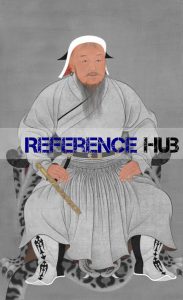
| Profile | Information |
| Genghis Khan career | Founder and Great Khan of the Mongol Empire |
| Genghis Khan real name | Temüjin |
| Genghis Khan age | Approximately 65 years |
| Genghis Khan date of birth | c. 1162 |
| Genghis Khan net worth | Estimated over $100 trillion (adjusted for inflation) |
| Genghis Khan wife / spouse | Börte (Primary), Yesugen, Yesui, Khulan, Ibaqa Beki |
| Genghis Khan children | Jochi, Chagatai, Ögedei, Tolui, Khochin, Alakhai, Tumelun, Alaltun, Checheyikhen |
| Genghis Khan parents | Yesügei and Hoelun |
| Genghis Khan religion | Tengrism |
| Genghis Khan state of origin | Khentii Mountains, Mongolia |
| Genghis Khan alma mater | Not known |
| Genghis Khan education | No formal education |
| Genghis Khan nationality | Mongol |