Prism Forge Ada Lovelace Biography: 2026 Technological Influence, Cultural Resonance, Enduring Legacy & Contemporary Spotlight

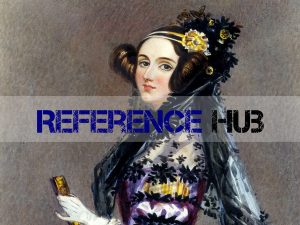
Ada Lovelace was born on December 10, 1815, in London, England. She was the daughter of the famous poet Lord Byron and Anne Isabella Milbanke Byron. Her parents separated soon after her birth, and she was raised by her mother, who encouraged her to study mathematics and science instead of poetry. This early guidance shaped her future and gave her the foundation to become one of the most remarkable figures in computing history.
She received private tutoring from some of the best scholars of her time, including Mary Somerville, a respected scientist. Despite the restrictions placed on women in the 19th century, Ada developed strong analytical skills and a deep interest in mechanical inventions. Her education allowed her to combine logic with imagination, which later became her greatest strength.
Ada’s career began when she studied Charles Babbage’s Difference Engine, a mechanical calculator. She became fascinated by his ideas and later collaborated with him on the Analytical Engine, a more advanced design. In 1842, she translated a paper by Luigi Federico Menabrea about the Analytical Engine and added her own extensive notes. These notes included what is now considered the first computer algorithm, making her the world’s first computer programmer.
Her vision went beyond simple calculations. Ada imagined that machines could one day create music, art, and complex patterns, showing her ability to see possibilities far ahead of her time. This foresight set her apart as not just a mathematician but also a visionary thinker.
Ada married William King-Noel, who later became the Earl of Lovelace, in 1835. Together they had three children. Despite her achievements, she faced skepticism because of her gender and struggled with health problems throughout her life. She died at the young age of 36 on November 27, 1852, from uterine cancer.
At the time of her death, her work was not fully recognized, but history later celebrated her as a pioneer in computing. Today, Ada Lovelace is remembered as the first computer programmer and a symbol of women’s contributions to science and technology. Her legacy continues to inspire generations, and Ada Lovelace Day is celebrated worldwide to honor women in STEM fields. Her biography reflects brilliance, imagination, and courage, showing how determination can break barriers and shape the future.
Ada Lovelace Ancestry and Familial Origins in Romantic London
The formative years of this pioneering mathematician were defined by an extraordinary family dynamic that set her apart from typical Victorian noblewomen. Born into the heart of London’s cultural elite, she was the only legitimate child of the famous Romantic poet Lord Byron and the intellectual reformer Anne Isabella Milbanke. Her arrival in late 1815 was met with immediate domestic turmoil; her parents separated just weeks after her birth. This fractured beginning meant that she never personally knew her father, who left England permanently and died abroad when she was still a young child.
Her upbringing was strictly managed by her mother, Lady Byron, who harbored a deep-seated fear that her daughter might inherit the “volatile” and “unstable” poetic temperament of her father. To counteract this perceived risk, Lady Byron insisted on a rigorous education focused on logic, science, and mathematics—subjects rarely encouraged for women at the time. This environment was designed to suppress imagination in favor of rationality, yet it unintentionally provided the young girl with the very tools she would eventually use to revolutionize the world of computing. Growing up as Lord Byron’s daughter in a house that shunned poetry, she developed a unique internal world where numbers and symbols eventually took on a life of their own.
Ada Lovelace Scholarly Training and Mentorship Under Prominent Minds
Despite the societal barriers that limited women’s access to formal university education in the 19th century, she received world-class instruction through private tutoring. Her mother sought out the most accomplished scholars of the day to sharpen her daughter’s analytical mind. Among her most influential mentors was Mary Somerville, a renowned scientific author and polymath who became a close friend and role model. Somerville did more than just teach calculus and astronomy; she introduced her pupil to the wider scientific community, showing her that a woman could indeed hold a place of authority in the world of intellectual discovery.
Her studies were not limited to a single discipline. She delved into advanced trigonometry, algebra, and the works of Euclid, often exchanging detailed letters with her tutors about complex mathematical proofs. In her later years, she was guided by the famous logician Augustus De Morgan, who recognized her “most singular combination of qualities” perfectly fitted for scientific discovery. This unconventional academic background allowed her to develop a sophisticated understanding of abstract concepts. By the time she reached adulthood, she had transcended the basic curriculum of her peers, possessing a level of technical expertise that few men in the Victorian era could match, preparing her for a collaboration that would change history.
Ada Lovelace Professional Genesis and Fascinations with Mechanical Logic
The trajectory of her career took a decisive turn when she was introduced to the work of Charles Babbage, a mathematician and inventor often called the “father of the computer.” At just seventeen, she attended a gathering where she first saw a prototype of Babbage’s Difference Engine, a mechanical calculator designed to tabulate mathematical functions. While many observers saw the device as a mere curiosity, she was instantly captivated by its potential. She began a frequent correspondence with Babbage, visiting his laboratory to study the intricate gears and levers that powered his inventions.
This early interest in mechanical systems was not just a passing hobby but the start of a deep professional obsession. She possessed a rare ability to “see” the logic behind the machinery, moving beyond the physical components to understand the underlying principles of operation. Her university-level training in mathematics allowed her to grasp the nuances of Babbage’s designs in a way that even his financial backers often could not. This period of her life was characterized by a relentless curiosity and a desire to contribute to the “science of operations,” a field she believed would eventually allow machines to perform tasks that were previously thought to be the sole domain of human intelligence.
Ada Lovelace Scientific Partnership and Technical Contributions with Charles Babbage
The most significant chapter of her professional life involved a close intellectual partnership with Charles Babbage regarding his most ambitious project: the Analytical Engine. Unlike the earlier Difference Engine, the Analytical Engine was designed as a general-purpose, programmable machine. In the early 1840s, she was tasked with translating an article about the engine written by the Italian engineer Luigi Federico Menabrea. However, she did much more than translate; she added a set of “Notes” that were three times longer than the original text, providing the most comprehensive explanation of the machine’s architecture ever written.
In these extensive writings, she meticulously detailed how the engine could be instructed to perform specific tasks using a system of punched cards, similar to those used in Jacquard weaving looms. Her collaboration with Babbage was highly symbiotic; while he focused on the mechanical engineering, she focused on the potential for programming and symbolic logic. She acted as his best interpreter, translating his complex mechanical ideas into a language that highlighted the machine’s revolutionary potential. This partnership demonstrated her profound understanding of the Analytical Engine’s capability to store data and execute a sequence of instructions, laying the conceptual groundwork for what we now recognize as software development.
Ada Lovelace Groundbreaking Algorithms and Visionary Technical Milestones
Within her famous “Notes” on the Analytical Engine, she included what is now universally recognized as the first computer algorithm in history. Labeled “Note G,” this section provided a step-by-step sequence of operations for the machine to calculate Bernoulli numbers, a complex mathematical sequence. This was not a simple calculation but a demonstration of how a machine could use “branching” and “looping” to solve problems of significant difficulty. Because this was the first explicit description of a software program intended for a machine, she is widely celebrated as the world’s first computer programmer.
Beyond the specific algorithm, her most visionary achievement was her realization that the Analytical Engine could process more than just numbers. She theorized that if a machine could manipulate symbols according to rules, it could potentially compose music, create graphics, or produce scientific art. She wrote that the engine “weaves algebraic patterns just as the Jacquard-loom weaves flowers and leaves.” This insight was nearly a century ahead of its time, foreseeing the transition from a mere calculator to a universal computing machine. While Babbage saw a tool for mathematics, she saw a “thinking machine” capable of creative expression, making her contributions a cornerstone of computing history.
Ada Lovelace Creative Philosophy and Unique Intellectual Vision
Her approach to science was distinctively different from the cold, purely rational method favored by many of her contemporaries. She described her own philosophy as “poetical science,” a term that reflected her ability to combine mathematical precision with a rich, imaginative perspective. She believed that imagination was a “discovering faculty” that allowed scientists to see beyond the obvious and conceptualize unseen worlds. This unique worldview was likely a fusion of her mother’s insistence on logic and the creative spark she inherited from her father, Lord Byron.
By bridging the gap between the arts and the sciences, she was able to intuit the future of technology in a way that purely technical minds often missed. She did not view machines as mere cold iron, but as partners in a creative process. Her letters reveal a mind that was constantly searching for patterns and connections between seemingly unrelated fields, such as music, textiles, and mathematics. This intellectual style allowed her to describe the “science of operations” with a level of eloquence and foresight that makes her work still relevant to modern computer scientists. She proved that the most profound technological breakthroughs often require a leap of imagination as much as a mastery of equations.
Ada Lovelace Domestic Realities and Enduring Personal Hurdles
Away from her mathematical research, her life was marked by the responsibilities and constraints of her social standing. In 1835, she married William King-Noel, who later became the Earl of Lovelace, giving her the title by which she is most famously known. Together, they had three children, and for several years, her domestic duties and role as a countess took precedence over her scientific pursuits. Despite these commitments, she never lost her passion for mathematics, eventually returning to her studies with the support of her husband, who took pride in her intellectual abilities.
Her personal journey was also complicated by persistent health issues that began in her childhood and worsened as she aged. She suffered from various ailments, including chronic respiratory problems and digestive issues, which often left her bedridden for months. Later in life, she also struggled with a gambling addiction, attempting to use her mathematical skills to develop a “winning system” for horse racing—an endeavor that resulted in significant financial losses. Despite these private battles and the physical pain she endured, her dedication to her work remained steadfast until her death from uterine cancer at the age of thirty-six. Her life was a testament to the struggle of a brilliant mind operating within the rigid physical and social boundaries of the Victorian era.
Ada Lovelace Historical Adversity and Enduring Scientific Impact
As a woman pursuing a career in a male-dominated field, she faced significant skepticism and cultural barriers. In the Victorian era, it was highly unusual for a noblewoman to publish scientific papers, and she often had to sign her work with her initials, “A.A.L.,” to maintain a level of anonymity. Despite her brilliance, her contributions were largely forgotten by the general public for nearly a century after her death in 1852. It was not until the mid-20th century, as the first modern computers were being developed, that her “Notes” were rediscovered and her role as a pioneer was finally acknowledged.
Her legacy was revitalized during the digital revolution, when computer scientists like Alan Turing were inspired by her insights into the potential of “thinking machines.” Today, she is remembered not just as a historical figure, but as a symbol of women’s leadership in STEM. She is posthumously recognized as a visionary who predicted the fundamental nature of modern computing long before the hardware even existed. Her ability to overcome the gender biases of her time and her struggle against debilitating illness only add to the weight of her achievements. She died at the same age as her father, but her intellectual legacy has far outlasted the scandalous reputation of the Byron name, securing her place in the pantheon of scientific greats.
Ada Lovelace Modern Recognition and Continuing Global Inspiration
In the contemporary era, her name has become synonymous with innovation and the empowerment of women in technology. Every October, the world celebrates “Ada Lovelace Day,” an international event dedicated to highlighting the achievements of women in science, technology, engineering, and mathematics. This celebration serves to inspire the next generation of female programmers and scientists, ensuring that her story of perseverance and vision continues to resonate. Her life has been the subject of numerous biographies, plays, and even graphic novels, cementing her status as a cultural icon as much as a scientific one.
The “Ada” programming language, developed by the U.S. Department of Defense in the late 1970s, was named in her honor, reflecting her status as the foundational figure of the field. Beyond naming conventions, her legacy lives on in the very way we interact with technology today—seeing computers as tools for creativity, art, and complex problem-solving rather than just simple calculators. She remains a powerful reminder that the most significant technological leaps often start with a person who is brave enough to imagine a world that does not yet exist. Her influence continues to grow, serving as a beacon for anyone who seeks to blend the precision of logic with the limitless power of the human imagination.
Ada Lovelace Age Measuring the Span of a Visionary Life
Ada Lovelace was born on December 10, 1815, in London, England. At the time of her death in late 1852, the final Ada Lovelace age was 36 years. This specific lifespan precisely mirrors the number of years her father, Lord Byron, lived before his own passing.
Ada Lovelace Husband Examining the Scope of Her Domestic Partnership
Ada Lovelace was married to William King-Noel. He held the title of the 1st Earl of Lovelace. Their marriage took place in 1835. He served as her primary legal and social partner throughout her adult life.
Ada Lovelace Cause of Death Investigating the Finality of Her Physical Journey
Ada Lovelace died primarily from uterine cancer. This condition was exacerbated by the medical practice of bloodletting performed by her physicians. She passed away on November 27, 1852.
Ada Lovelace Children Tracing the Next Generation of Her Personal Legacy
Ada Lovelace had three children named Byron, Anne Blunt, and Ralph Gordon. Her eldest son, Byron, succeeded his father as the Viscount Ockham. Her daughter, Anne Blunt, became a famous traveler and breeder of Arabian horses. Ralph Gordon eventually became the 2nd Earl of Lovelace.
Ada Lovelace Nationality Defining the Geopolitical Context of Her Identity
Ada Lovelace held British nationality. She was born within the United Kingdom in the city of London. Her legal identity was formally tied to England throughout her entire life. She remained a citizen of Britain until her death in 1852.
Ada Lovelace Profile Table Summarizing Key Attributes in a Structural Format
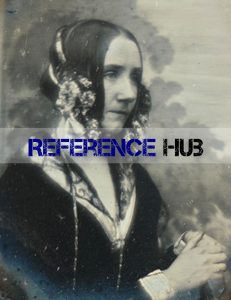
| Profile | Information |
| Ada Lovelace career | Mathematician, Writer, and Computing Pioneer |
| Ada Lovelace real name | Augusta Ada Byron |
| Ada Lovelace age | 36 years |
| Ada Lovelace date of birth | December 10, 1815 |
| Ada Lovelace net worth | Not applicable (Historical figure with significant inherited wealth and debt) |
| Ada Lovelace wife / spouse | William King-Noel, 1st Earl of Lovelace |
| Ada Lovelace children | Byron King-Noel, Anne Blunt, Ralph King-Milbanke |
| Ada Lovelace parents | Lord Byron and Anne Isabella Milbanke |
| Ada Lovelace religion | Christian (Anglican) |
| Ada Lovelace state of origin | London, England |
| Ada Lovelace alma mater | Privately educated by tutors |
| Ada Lovelace education | Advanced private tutoring in mathematics and science |
| Ada Lovelace nationality | British |