Interrogating Tilda Swinton Biography | 2026 Film Highlights, Cultural Resonance, Media Presence & Global Influence Spotlight

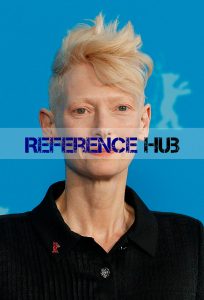
Tilda Swinton was born Katherine Matilda Swinton on November 5, 1960, in London, England. She grew up in Scotland in a family with aristocratic roots. Her father was Sir John Swinton of Kimmerghame, and her upbringing exposed her to literature, theater, and art. She attended West Heath Girls’ School and later studied at Fettes College in Edinburgh. She went on to the University of Cambridge, where she graduated with a degree in Social and Political Sciences. During her time at Cambridge, she became involved in theater, which shaped her path toward acting.
She began her career on stage with the Royal Shakespeare Company before moving into film. Her early work with director Derek Jarman in Caravaggio in 1986 introduced her to art-house cinema. She gained recognition for her role in Orlando in 1992, where she played a character who changes gender and lives across centuries. This performance established her reputation for taking unconventional and challenging roles.
Her rise to fame continued with films such as The Beach and Vanilla Sky in the early 2000s. She achieved international acclaim with Michael Clayton in 2007, where she played a corporate lawyer. Her performance earned her the Academy Award for Best Supporting Actress. She went on to star in We Need to Talk About Kevin, Snowpiercer, Doctor Strange, and Suspiria, showing her ability to move between independent films and mainstream blockbusters. She also collaborated with directors like Luca Guadagnino, Bong Joon-ho, and Wes Anderson, further expanding her influence in cinema.
Her achievements include winning an Academy Award, two BAFTA Awards, and a Volpi Cup. She has also received nominations for Golden Globe Awards and Screen Actors Guild Awards. In 2020, she was ranked among the greatest actors of the 21st century. Her career reflects her dedication to transformative performances and her willingness to explore eccentric and enigmatic characters.
Tilda Swinton works mainly in the British and international film industry. Her profession includes acting and producing. She is known for her androgynous style and experimental approach to roles, which makes her stand out in Hollywood and beyond. Her success is measured not only by awards but also by her influence on modern cinema.
She has two children with her former partner John Byrne. Later, she began a relationship with German painter Sandro Kopp. She balances her private life with her professional commitments and remains devoted to her family.
Her net worth is estimated in millions, earned through acting, producing, and endorsements. She continues to thrive in the entertainment industry, appearing in films that challenge traditional storytelling.
Tilda Swinton’s legacy is tied to her fearless approach to acting and her groundbreaking roles. Her journey reflects creativity, resilience, and vision. She remains a cultural icon whose work continues to inspire audiences and shape the future of cinema.
Tilda Swinton Scottish Heritage and Aristocratic Ancestry
Tilda Swinton descends from an ancient Anglo-Scottish family with roots that trace back to the ninth century. She was born in London as the only daughter of Sir John Swinton, a prominent military officer who served as a major-general in the British Army. Despite her birthplace, she has spent much of her life in the Scottish Highlands and firmly identifies as Scottish. Her upbringing was influenced by a family history deeply entwined with the British military and the landed gentry. Growing up with three brothers, she experienced a childhood that balanced high-society expectations with her family’s historic ties to the Kimmerghame estate.
The cultural environment of her youth was shaped by the traditions of her lineage and her father’s distinguished career. At the age of ten, she was sent to board at the West Heath Girls’ School in Kent, an experience she later described as isolating. During her time there, she was a classmate of Lady Diana Spencer, the future Princess of Wales. This early immersion in elite British institutions provided her with a unique perspective on social structures, which she would later critique and explore through her artistic work. Her heritage remains a significant part of her identity, influencing her grounded connection to the landscape and history of Scotland.
Tilda Swinton Academic Pursuits and University Theater Engagement
Tilda Swinton pursued her higher education at the University of Cambridge, where she attended New Hall. She graduated in 1983 with a degree in social and political sciences, a field of study that reflected her intellectual curiosity about societal mechanics and power dynamics. While she initially entered the university with aspirations of becoming a writer, her focus shifted toward performance during her undergraduate years. She became deeply involved in the university’s vibrant theater scene, where she began to experiment with the craft of acting on stage.
Her time at Cambridge was also marked by her political engagement, as she joined the Communist Party while studying. This period of academic and creative exploration was fundamental in shaping her analytical approach to characters and narratives. After completing her degree, she briefly joined the Royal Shakespeare Company in London. However, she soon realized that the traditional structures of classical theater did not align with her desire for more experimental expression. Her collegiate years served as the primary bridge between her aristocratic background and her future as a pioneering figure in independent and avant-garde cinema.
Tilda Swinton Artistic Foundation and Independent Film Breakthrough
Tilda Swinton began her professional film career through a transformative partnership with the experimental filmmaker Derek Jarman. Her debut in Jarman’s 1986 film Caravaggio marked the start of a prolific nine-year collaboration that would define her early artistic identity. She appeared in eight of his films, including The Last of England, The Garden, and Edward II, the latter of which earned her the Best Actress award at the Venice Film Festival. These projects allowed her to develop a fearless approach to performance within the world of avant-garde and queer cinema.
Her breakout to wider international acclaim came in 1992 with the title role in Orlando, directed by Sally Potter. In this adaptation of Virginia Woolf’s novel, she portrayed a character who lives for four centuries and changes gender from male to female. This performance showcased her unique ability to embody gender fluidity and androgynous beauty, themes that would become central to her professional persona. The success of Orlando established her as a major force in the independent film world. It proved that her unconventional style and intellectual depth could resonate with a broad, global audience while maintaining her integrity as a performance artist.
Tilda Swinton Mainstream Transition and Academy Award Success
Tilda Swinton successfully crossed over into mainstream Hollywood cinema while continuing to choose complex and challenging projects. In the early 2000s, she appeared in notable films such as The Beach and Vanilla Sky, bringing her ethereal presence to larger studio productions. Her professional peak in the commercial sphere arrived in 2007 with her role as the ruthless corporate lawyer Karen Crowder in the legal thriller Michael Clayton. Her nuanced portrayal of a woman unraveling under the pressure of corruption earned her the Academy Award for Best Supporting Actress.
Winning the Oscar solidified her status as one of the industry’s most respected performers, capable of navigating both art-house and blockbuster environments. She continued this balance by appearing as the White Witch in the Chronicles of Narnia franchise while simultaneously starring in intense psychological dramas like Julia and I Am Love. Her ability to transition between the role of a villainous sorceress and a high-stakes corporate fixer demonstrated her incredible range. This period of her career was defined by her mastery of various genres, ensuring her place as a bankable star who never sacrificed her commitment to experimental and thought-provoking work.
Tilda Swinton Collaborative Partnerships and Iconic Character Roles
Tilda Swinton is widely recognized for her long-term creative relationships with some of the most visionary directors in modern cinema. She has become a frequent collaborator of Wes Anderson, appearing in numerous films such as Moonrise Kingdom, The Grand Budapest Hotel, and Asteroid City. Her ability to disappear into Anderson’s highly stylized worlds has made her a central figure in his ensemble casts. She has also forged successful partnerships with Luca Guadagnino, starring in the haunting remake of Suspiria where she performed multiple roles, including a male character under heavy prosthetics.
Her work with international auteurs like Bong Joon-ho in Snowpiercer and Okja further highlights her penchant for eccentric and transformative performances. In Jim Jarmusch’s Only Lovers Left Alive, she portrayed an ancient vampire, a role that perfectly utilized her timeless and otherworldly aesthetic. These collaborations are characterized by a high degree of mutual trust and artistic experimentation. By working repeatedly with directors who value her input as a co-creator, she has built a filmography of iconic, visually striking characters. These roles have cemented her reputation as a “chameleon” actress who prioritizes the collective artistic vision over traditional Hollywood stardom.
Tilda Swinton Professional Persona and Experimental Performance Art
Tilda Swinton often describes herself as a “performer” rather than a traditional actress, emphasizing her roots in experimental art. Her professional persona is defined by an androgynous style and a willingness to transcend conventional boundaries of identity. This is perhaps most famously seen in her living art piece, The Maybe, in which she slept in a glass box at the Serpentine Gallery in London and later at MoMA in New York. This performance challenged the relationship between the artist and the audience, turning her own physical presence into a silent exhibit.
Her approach to her craft is deeply immersive and often involves significant physical transformations through makeup and costume. She has played dual roles, gender-swapped characters, and even performed under pseudonyms to maintain the mystery of a production. This experimental spirit extends to her fashion collaborations and her work in preserving film history. She is widely viewed as a cultural icon who uses her platform to advocate for artistic freedom and the preservation of independent cinema. Her professional identity remains fluid and unclassifiable, reflecting her belief that the art of performance should be a constant process of change and exploration.
Tilda Swinton Domestic Life and Partnerships in the Scottish Highlands
Tilda Swinton maintains a private and unconventional domestic life in the coastal town of Nairn in the Scottish Highlands. She was in a long-term relationship with the Scottish playwright and artist John Byrne for many years. During their time together, they welcomed twins, Honor and Xavier, who were born in 1997. Following her split from Byrne, she entered a partnership with the German-born painter Sandro Kopp, whom she met on the set of The Chronicles of Narnia in 2004. The couple has remained together for over two decades, sharing a life that is deeply rooted in the local community and the arts.
Her approach to family and relationships is characterized by a sense of harmony and a lack of traditional drama. For a period, she and Kopp shared a home with Byrne, an arrangement she described as a happy and practical way to co-parent their children. Her daughter, Honor Swinton Byrne, has since followed in her mother’s footsteps, earning acclaim for her starring role in the film The Souvenir. Swinton often speaks of her children as her greatest teachers, crediting them with helping her maintain a balanced and relaxed perspective on fame. Her home in Scotland serves as a sanctuary that allows her to focus on her family and her creative projects away from the glare of the media.
Tilda Swinton Financial Standing and Enduring Career Success
Tilda Swinton has built a significant financial foundation through her diverse activities as an actress, producer, and fashion icon. As of early 2026, her net worth is estimated to be approximately $14 million. This wealth is a result of her participation in massive global franchises like the Marvel Cinematic Universe, where she played the Ancient One in Doctor Strange, and her starring roles in numerous commercially successful films. Beyond her acting salaries, she has earned income through her work as a producer and through high-profile collaborations with luxury fashion houses like Chanel.
Her success is measured not only by her bank account but by her sustained relevance in an industry that often favors younger stars. She has managed to maintain a career at the highest level for over forty years, a feat achieved through careful project selection and a refusal to conform to Hollywood norms. Her financial independence has allowed her to support independent filmmakers and experimental projects that might not otherwise find funding. She remains one of the most bankable and respected actresses in Great Britain, proving that a career built on artistic integrity can also lead to substantial financial and professional success.
Tilda Swinton Cinematic Impact and Ongoing Creative Legacy
Tilda Swinton’s legacy in cinema is rooted in her fearless defiance of category and her role as a bridge between the avant-garde and the mainstream. She is widely regarded as one of the greatest actors of the 21st century, cited for her ability to bring a sense of mystery and intellectual rigor to every role. Her impact is particularly felt in her advocacy for gender fluidity and her challenges to traditional beauty standards. By consistently portraying characters that transcend societal norms, she has paved the way for more diverse and experimental storytelling in global cinema.
Her legacy also includes her contributions to film preservation and her mentorship of emerging filmmakers. In 2020, she was honored with the BFI Fellowship, the highest accolade bestowed by the British Film Institute, for her extraordinary contribution to film culture. As she continues to collaborate with a new generation of directors, such as Pedro Almodóvar, her influence on the medium remains profound. She is viewed as a pioneer who has successfully navigated fame while remaining an uncompromising artist. Her ongoing journey ensures that she will be remembered as a cultural icon whose work has fundamentally shifted the boundaries of what is possible on screen.
Tilda Swinton Age (Chronological Lifecycle Stage and Biological Timeline Overview)
Tilda Swinton was born on November 5, 1960. As of January 2026, Tilda Swinton age is 65 years.
Tilda Swinton Husband (Marital History Status and Romantic Partnership Scope)
Tilda Swinton is not currently married. She has been in a long-term relationship with the German-New Zealand visual artist Sandro Kopp since 2004. While media reports sometimes colloquially refer to him as her husband, the couple has not officially wed as of early 2026.
Tilda Swinton Nationality (National Identity Roots and Sovereign State Allegiance)
Tilda Swinton holds British nationality and identifies as a Scot. Although born in London, she considers herself “first and foremost” a Scottish citizen due to her ancestral roots and long-term residence in the Highlands. She has publicly advocated for Scottish independence and explicitly rejects being referred to as English.
Tilda Swinton Movies (Cinematic Catalog and Artistic Screen Performance History)
Tilda Swinton has developed an extensive filmography that includes critically acclaimed titles such as Orlando, Michael Clayton, and We Need to Talk About Kevin. Her diverse body of work features roles in major productions like The Chronicles of Narnia series, Doctor Strange, and Avengers: Endgame. She is also recognized for her performances in notable films such as Snowpiercer, Only Lovers Left Alive, Suspiria, and The Room Next Door. Her career is further highlighted by frequent collaborations on projects like The Grand Budapest Hotel, The French Dispatch, and Asteroid City.
Tilda Swinton Height (Physical Stature Measurement and Vertical Body Scale)
Tilda Swinton stands at a height of 5 feet 11 inches. This stature is equivalent to approximately 180 centimeters. Industry records and professional databases consistently list this specific measurement for the actress.
Tilda Swinton Children (Family Growth Record and Private Maternal Legacy)
Tilda Swinton is the mother of two children, twins named Honor Swinton Byrne and Xavier Swinton Byrne. They were born on October 6, 1997, during her previous long-term relationship with playwright John Byrne. Her daughter Honor has established a career as an actress, while her son Xavier primarily works in the art department for major film productions.
Tilda Swinton Profile Table (Essential Biographical Data and Summary Identity Matrix)

| Profile | Information |
| Tilda Swinton career | Actress, producer, and performance artist |
| Tilda Swinton real name | Katherine Matilda Swinton |
| Tilda Swinton age | 65 years |
| Tilda Swinton date of birth | November 5, 1960 |
| Tilda Swinton net worth | $14 million |
| Tilda Swinton wife / spouse | Sandro Kopp (partner since 2004) |
| Tilda Swinton children | Honor Swinton Byrne and Xavier Swinton Byrne |
| Tilda Swinton parents | Sir John Swinton and Judith Balfour |
| Tilda Swinton religion | Secular (identifies as anti-religious) |
| Tilda Swinton state of origin | London (born); Scottish Highlands (resident) |
| Tilda Swinton alma mater | University of Cambridge (New Hall) |
| Tilda Swinton education | B.A. in Social and Political Sciences |
| Tilda Swinton nationality | British (identifies as Scottish) |