Spectra Path Sir CV Raman Biography: Nobel Prize Recognition, Scientific Breakthroughs, Enduring Influence & Modern Research Spotlight

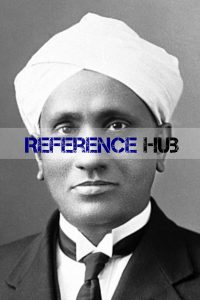
Sir Chandrasekhara Venkata Raman was born on November 7, 1888, in Tiruchirapalli, Madras Presidency, British India. He grew up in an academic family, as his father was a lecturer in mathematics and physics. This environment nurtured his curiosity in science and music, and it inspired him to pursue higher education in physics.
Raman studied at Presidency College in Madras, where he graduated with a Bachelor of Arts degree in Physics in 1904, earning a gold medal. He continued his studies and completed a Master of Arts degree in Physics in 1907 with top distinctions. His academic success laid the foundation for his future career in scientific research.
He began his professional journey by joining the Indian Finance Department in 1907. However, his passion for science never faded, and he carried out research in his spare time at the Indian Association for the Cultivation of Science in Calcutta. In 1917, he was appointed Palit Professor of Physics at the University of Calcutta, where he conducted pioneering studies in optics and acoustics.
Raman’s most famous achievement came in 1928 when he discovered the phenomenon of light scattering, later known as the Raman Effect, with the help of his colleague K. S. Krishnan. This discovery earned him the Nobel Prize in Physics in 1930, making him the first Asian and non-White recipient of the award in the field. He was knighted in 1929 and later honored with India’s highest civilian award, the Bharat Ratna, in 1954.
He continued to contribute to science by founding the Raman Research Institute in Bangalore in 1948. His leadership and vision helped establish independent scientific institutions in India. He also mentored future scientists, including Vikram Sarabhai, who later became a pioneer in India’s space program.
Raman married Lokasundari Ammal in 1907, and they had two children. He enjoyed music and had a deep interest in acoustics, which influenced some of his scientific work. Though he faced criticism and challenges, especially due to his strong opinions on science policy, his dedication to research remained unwavering.
Sir CV Raman passed away on November 21, 1970, at the age of 82. His biography reflects a life of brilliance, resilience, and service to science. His discovery of the Raman Effect continues to play a vital role in spectroscopy and material science, and his legacy lives on through the institutions he built and the scientists he inspired.
Sir CV Raman scientific breakthroughs in light scattering and the Raman effect
Sir CV Raman fundamentally changed how we perceive the interaction between light and matter. While traveling across the Mediterranean Sea, he became fascinated by the deep blue color of the water, challenging the prevailing theory that it was merely a reflection of the sky. This curiosity led to a series of rigorous laboratory experiments in Calcutta. In 1928, he discovered that when a beam of monochromatic light passes through a transparent medium, a small fraction of the light emerges with a different color and wavelength. This phenomenon, now known as the Raman Effect, proved that photons can exchange energy with molecules, causing them to vibrate or rotate. This discovery provided a powerful tool for identifying the molecular structure of various substances. Unlike previous methods, Raman spectroscopy allowed for non-destructive testing, making it indispensable in modern chemistry and physics. His work confirmed the quantum nature of light and earned him the Nobel Prize in Physics, marking a historic moment for global science.
Sir CV Raman academic journey from Tiruchirappalli to the University of Calcutta
Sir CV Raman displayed exceptional intellectual abilities from a very young age. He completed his secondary education well ahead of his peers and enrolled at Presidency College in Madras. Despite his immense interest in physics, he initially entered the Indian Finance Service because scientific research opportunities were scarce under colonial rule. However, his passion for the laboratory never faded. Even while working as an assistant accountant general, he spent his evenings conducting experiments at the Indian Association for the Cultivation of Science. His dedication eventually caught the attention of the academic community, leading to a prestigious professorship at the University of Calcutta. This transition from a government bureaucrat to a full-time researcher allowed him to mentor a new generation of Indian scientists. His career path serves as a testament to his resilience and his unwavering commitment to uncovering the mysteries of the natural world through empirical evidence and mathematical precision.
Sir CV Raman contributions to acoustics and the physics of musical instruments
Sir CV Raman possessed a deep appreciation for music, which he translated into a sophisticated field of scientific inquiry. He was particularly intrigued by the unique sounds produced by both Indian and Western instruments. His research into the transverse vibrations of bowed strings provided a mathematical foundation for understanding how a violin produces its rich tones. Furthermore, he was the first to explain the harmonic nature of the tabla and the mridangam. Unlike many percussion instruments that produce non-periodic sounds, these Indian drums are designed to create harmonious overtones. By applying the principles of physics to these traditional instruments, he bridged the gap between cultural heritage and modern science. His work in acoustics demonstrated that beauty in music is governed by the same physical laws that dictate the movement of light and planets. This interdisciplinary approach remains a hallmark of his scientific legacy, showing his ability to find complex patterns in everyday sensory experiences.
Sir CV Raman institutional leadership and the founding of the Raman Research Institute
Sir CV Raman understood that sustainable scientific progress required robust institutions. After leaving the University of Calcutta, he took over the leadership of the Indian Institute of Science in Bangalore. During his tenure, he revamped the research departments and encouraged a culture of excellence and independent thinking. Later, he established his own sanctuary for science, the Raman Research Institute. He envisioned this space as a place where researchers could pursue pure science without the pressures of political or commercial interests. He was known for his hands-on approach, often spending time in the gardens or the labs, deeply involved in the smallest details of the facility. His leadership style was characterized by a fierce independence and a belief that a nation’s strength lies in its capacity for original thought. Through these institutions, he created a self-sustaining ecosystem for Indian physics that continues to contribute to global knowledge today.
Sir CV Raman lasting influence on global physics and Nobel recognition
Sir CV Raman occupies a singular place in the history of science as the first Asian to win a Nobel Prize in a scientific field. This recognition was not just a personal victory but a symbol of the rising intellectual power of the East. His discovery of the Raman Effect opened the door to countless applications, from identifying fake gemstones to monitoring chemical reactions in real-time. Today, Raman spectroscopy is used by NASA on Mars rovers to analyze the composition of planetary soil. Beyond his technical achievements, he inspired a sense of pride and possibility among scientists in developing nations. He advocated for the use of simple, locally made equipment rather than relying solely on expensive imports. His life story encourages researchers to trust their observations and to question established dogmas. The legacy of his work is visible in every laboratory that uses light to peer into the atomic heart of matter.
Sir CV Raman Age defining the temporal span of a storied existence
Sir CV Raman was born on November 7, 1888. Regarding the Sir CV Raman age, he was 82 years old at the time of his passing on November 21, 1970.
Sir CV Raman Inventions highlighting the legacy of revolutionary optical breakthroughs
Sir CV Raman discovered the Raman effect, which is the inelastic scattering of photons that results in a shift in the wavelength of light. He developed a specialized spectrograph to observe and photograph these modified spectral lines in various liquids and solids. His research led to the invention of Raman spectroscopy, a technique used for the non-destructive analysis of molecular structures. He also formulated the Raman-Nath theory, which describes how light is diffracted by ultrasonic waves in a liquid medium.
Sir CV Raman Religion exploring the spiritual framework of a scientific mind
Sir CV Raman was born into a Tamil Brahmin family and maintained a casual approach toward religious orthodoxy throughout his life. He openly rejected concepts such as heaven, hell, rebirth, and reincarnation, stating that human existence is defined solely by birth, life, and death. While he observed certain cultural traditions like vegetarianism, he viewed the universe itself as the only place to seek evidence of a divine presence. He advocated for science as a universal language that could transcend the divisions created by organized religions.
Sir CV Raman Full Name documenting the complete formal identity of the laureate
The full name of the scientist commonly known as Sir CV Raman is Chandrasekhara Venkata Raman. He was born with this given name in Tiruchirappalli. The prefix “Sir” was added to his name following his knighthood in 1929.
Sir CV Raman Profile Table organizing the essential dimensions of a monumental career
| Profile | Information |
| Sir CV Raman career | Physicist, Professor, and Civil Servant |
| Sir CV Raman real name | Chandrasekhara Venkata Raman |
| Sir CV Raman age | 82 years |
| Sir CV Raman date of birth | November 7, 1888 |
| Sir CV Raman net worth | Primarily academic and institutional assets |
| Sir CV Raman wife / spouse | Lokasundari Ammal |
| Sir CV Raman children | Chandrasekhar Raman and Venkatraman Radhakrishnan |
| Sir CV Raman parents | R. Chandrasekhara Iyer and Parvathi Ammal |
| Sir CV Raman religion | Hinduism |
| Sir CV Raman state of origin | Tamil Nadu |
| Sir CV Raman alma mater | University of Madras (Presidency College) |
| Sir CV Raman education | B.A. and M.A. in Physics |
| Sir CV Raman nationality | Indian |