Reasserting Mahamudu Bawumia Biography | 2026 Presidential Campaign, Economic Vision, Media Spotlight & Governance Influence Dynamics


Mahamudu Bawumia was born on 7 October 1963 in Tamale, Northern Region of Ghana. He is 62 years old. He grew up in a disciplined household as the son of Alhaji Mumuni Bawumia, who was a teacher and politician. His early life in Tamale shaped his values and inspired his interest in education and leadership.
He attended Sakasaka Primary School and later Tamale Secondary School. He pursued higher education abroad, studying economics at the University of Buckingham in the United Kingdom. He earned a master’s degree in economics from Lincoln College, Oxford, and later completed a PhD in economics at Simon Fraser University in Canada. His academic journey gave him strong expertise in finance and economic policy.
He began his career as an economist and lecturer in Canada before returning to Ghana. In 2000, he joined the Bank of Ghana and rose to the position of Deputy Governor. His work focused on financial sector reforms and monetary policy, which earned him recognition as a skilled technocrat.
His political career started when he was chosen as running mate to Nana Akufo-Addo in the 2008 elections. He continued in this role in 2012, 2016, and 2020. In January 2017, he became Vice President of Ghana after the New Patriotic Party won the elections. He has since played a central role in government, focusing on economic management and digital transformation.
His achievements include leading Ghana’s digitalization agenda. He introduced mobile money interoperability, the national digital addressing system, and the rollout of the Ghana Card. He also promoted financial inclusion and modernization of public services. These initiatives have been recognized as major steps in transforming Ghana’s economy.
He works at the Office of the Vice President in Accra, where he continues to combine his academic background with governance. His success is measured by his ability to bring innovation into public administration and his influence in shaping economic policy.
Mahamudu Bawumia is married to Samira Bawumia, who is known for her advocacy in women’s empowerment and social development. Together they have children and maintain a strong public presence.
He has faced challenges, including criticism over Ghana’s debt levels and economic difficulties. Political opponents often question his forecasts and policies. Despite these challenges, he remains a key figure in Ghanaian politics and is respected for his knowledge and leadership.
His legacy is tied to his role in modernizing Ghana’s economy and promoting digital governance. He continues to inspire many as a technocrat who has brought practical solutions to national issues. His future prospects include further leadership within the New Patriotic Party and possible presidential ambitions.
Mahamudu Bawumia Family Roots and Northern Upbringing
The early life of this statesman began in the Northern Region of Ghana, specifically within the vibrant city of Tamale. Born into a household that valued both tradition and modernization, he was heavily influenced by the stature and discipline of his father, Alhaji Mumuni Bawumia. His father was a prominent teacher and a respected politician, providing a home environment where civic duty and intellectual curiosity were daily staples. Growing up in this setting, the future Vice President learned the importance of perseverance and community service. His childhood in Tamale was not merely about personal growth but about understanding the social fabric of his people. These formative years laid a solid foundation for his later career, instilling a sense of responsibility toward national development. Friends and family from his youth often recall a focused young man who balanced the rigors of local schooling with the expectations of a prominent family name. This period in the north remains a vital part of his identity, anchoring his political perspective in the realities of Ghana’s diverse cultural landscape.
Mahamudu Bawumia Academic Pursuit and Global Economics Training
The journey toward becoming a world-class economist started with local foundations at Sakasaka Primary School and Tamale Secondary School. These early academic milestones paved the way for international exposure. He moved to the United Kingdom to pursue a degree in economics at the University of Buckingham, where he honed his analytical skills. Not satisfied with a single degree, he continued his scholarly path at Lincoln College, Oxford, earning a master’s degree that broadened his understanding of global financial systems. His academic rigors culminated in Canada, where he attended Simon Fraser University to complete a PhD in economics. This extensive educational background provided him with a unique toolkit to address complex fiscal issues. By the time he returned to the professional world, he was not just an academic but a specialist capable of dissecting intricate market trends. This deep immersion in economic theory and practice at prestigious institutions around the globe defined his approach to public policy and financial management in his later years.
Mahamudu Bawumia Financial Sector Reform and Central Bank Leadership
Before entering the high-stakes world of partisan politics, he established himself as a formidable force in the financial industry. His career took a significant turn in the year 2000 when he joined the Bank of Ghana. He rose through the ranks to become the Deputy Governor, a role where he was instrumental in implementing critical reforms. During his tenure, he worked on the redenomination of the Cedi, a massive undertaking designed to simplify transactions and stabilize the currency’s psychological value. His work at the central bank was characterized by a meticulous attention to detail and a drive to modernize the banking sector. He helped steer the nation through various economic cycles, gaining a reputation for being a technocrat who prioritized data over rhetoric. His transition from an academic lecturer in Canada to a high-ranking official at the Bank of Ghana showed his ability to apply theoretical knowledge to the real-world challenges of a developing economy, making him a sought-after expert in regional financial circles.
Mahamudu Bawumia Political Ascent and Vice Presidential Partnership
The shift from the boardroom to the political platform occurred when he was selected as the running mate for Nana Akufo-Addo. This partnership proved to be one of the most enduring alliances in Ghanaian political history, spanning several election cycles in 2008, 2012, 2016, and 2020. Throughout these campaigns, he transformed into a political powerhouse, known for his data-driven speeches that often put opponents on the defensive. His ability to explain complex economic concepts in simple terms made him a favorite among the electorate. In January 2017, he officially assumed the office of the Vice President of Ghana. His rise to fame was not just about holding an office; it was about the style of leadership he brought to the presidency. He became the face of the administration’s economic policy, frequently engaging the public through town hall meetings and lectures. His role evolved from a supportive running mate to a central figure in the governance of the country, influencing both domestic strategy and international relations.
Mahamudu Bawumia Digital Transformation and Modernization Initiatives
One of his most significant contributions to the nation has been his relentless push for a “Digital Ghana.” As Vice President, he championed the digitalization agenda, arguing that technology is the shortest path to transparency and efficiency. He was the driving force behind the implementation of the National ID system, which sought to provide every Ghanaian with a unique identity. Furthermore, he spearheaded the mobile money interoperability project, a landmark achievement that allowed for seamless financial transactions across different networks. This move significantly boosted financial inclusion, bringing millions of unbanked citizens into the formal economy. His vision also extended to the digital addressing system, aimed at fixing the long-standing problem of unmapped locations across the country. These works have modernized public services, reduced corruption in government offices, and earned him international acclaim as a leader who understands the future of the global digital economy. His focus remains on building a robust infrastructure that supports innovation and economic growth.
Mahamudu Bawumia Executive Duties and Professional Philosophy
In his professional life at the Office of the Vice President in Accra, he is known for a tireless work ethic. His role involves presiding over the Economic Management Team, where he oversees the implementation of government programs. He blends the discipline of an economist with the pragmatism of a politician, often working late hours to review policy documents and meet with stakeholders. His professional philosophy centers on the belief that governance should be evidence-based. He often encourages his colleagues to rely on statistics and technological tools to solve social problems. This approach has redefined the office of the Vice President, making it a hub for policy innovation rather than just a ceremonial position. Whether he is representing the President at international summits or visiting local markets to observe the impact of inflation, his professional conduct remains consistent. He is viewed by many as a modern technocrat who has successfully navigated the complexities of African governance while maintaining a sharp focus on structural reforms.
Mahamudu Bawumia Domestic Life and Partnership with Samira
Beyond the corridors of power, he leads a balanced personal life centered on his family. He is married to Samira Bawumia, who has become a prominent public figure in her own right. Together, they are seen as a modern power couple, frequently appearing at state functions and community events. Samira is known for her advocacy in women’s empowerment and education, and her influence is often cited as a source of strength for the Vice President. They are the parents of several children, and despite the heavy demands of his office, he makes it a priority to stay involved in their lives. His role as a husband and father is a key part of his public image, projecting a sense of stability and traditional values. Balancing the intense scrutiny of political life with a private domestic world requires significant coordination, yet the couple has managed to maintain a cohesive and supportive family unit. This personal stability is often credited with giving him the mental fortitude to handle the pressures of national leadership.
Mahamudu Bawumia Economic Criticism and Political Hurdles
His journey has not been without significant hurdles and public scrutiny. As the head of the Economic Management Team, he has faced intense criticism over the country’s rising debt levels and the depreciation of the local currency. Political opponents often point to his past speeches on economic stability to highlight the gap between his promises and the current economic reality. Navigating these challenges has required him to defend unpopular policies and manage public expectations during times of global financial instability. There have been heated debates regarding the effectiveness of his digitalization projects, with some questioning the cost versus the actual impact on the average citizen. Despite these controversies, he remains a steadfast defender of his record, often arguing that the structural reforms he is implementing will yield long-term benefits. These challenges have tested his political resilience, forcing him to adapt his messaging and strategy in a highly polarized political environment.
Mahamudu Bawumia Governance Impact and Future Political Path
His legacy is increasingly defined by his role as a transformer of the Ghanaian state through technology and economic policy. He has shifted the political discourse from traditional rhetoric to a focus on systems, data, and institutional strength. Many see him as a leader who prepared Ghana for the fourth industrial revolution, creating a blueprint for other African nations to follow. His influence within the New Patriotic Party (NPP) is profound, and he is frequently discussed as a top contender for future leadership roles. As he looks toward the future, his prospects remain tied to the success of the current administration’s long-term goals. Whether he continues in an executive capacity or moves into new areas of leadership, his impact on the modernization of the Ghanaian economy is undeniable. His journey from a quiet economist in the central bank to a central figure in national history ensures that his name will be remembered as a pioneer of digital governance and a key architect of modern Ghana.
Mahamudu Bawumia Age: Current chronological status and life stage progression
Mahamudu Bawumia was born on 7 October 1963. Given the current date in 2026, Mahamudu Bawumia age is 62 years.
Mahamudu Bawumia Wife: Primary marital partnership and domestic family foundation
Mahamudu Bawumia is married to Samira Bawumia, who was born with the name Samira Ramadan. The couple has four children together. Their marriage has lasted for more than twenty years.
Mahamudu Bawumia First Wife: Initial matrimonial chapter and early household union
Official statements from the Office of the Vice President clarify that Mahamudu Bawumia has only one wife, Samira Bawumia. Despite public speculation regarding a first wife named Ramatu, his administration has formally dismissed such claims as untrue. Historical reports from some media outlets have previously alleged a marriage to a woman named Hajara Chebo prior to his current union. He has maintained that his sole marital relationship is with Samira Bawumia, whom he married in 2004.
Mahamudu Bawumia Children: Next generation lineage and direct family descendants
Mahamudu Bawumia has four children with his wife, Samira Bawumia. This group of offspring consists of three sons and one daughter. The couple maintains a high level of privacy regarding the specific identities and personal lives of their children. Most public records confirm the total count of their children without disclosing individual names.
Mahamudu Bawumia Hometown: Ancestral roots and geographical place of origin
Mahamudu Bawumia identifies Walewale as his hometown, which is located within the West Mamprusi District of the North East Region. Although he was born in Tamale, his ancestral and political roots are tied to this specific town. He is also frequently associated with Nalerigu due to his heritage within the Mamprugu traditional area. These locations serve as his primary residential and cultural home base outside of the capital.
Mahamudu Bawumia Father: Paternal heritage and foundational male family influence
The father of Mahamudu Bawumia was the late Alhaji Mumuni Bawumia. He was a multi-professional figure who worked as a teacher, a lawyer, and a high-ranking politician in Ghana. During his prominent career, he also served as the Chairman of the Council of State between 1993 and 2000. He held traditional significance as a Mamprugu Royal and the Paramount Chief of the Kperiga Traditional Area.
Mahamudu Bawumia Profile Table: Key data points and vital statistics overview
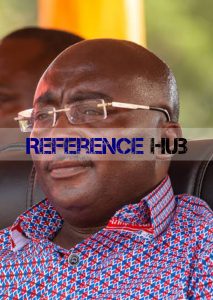
| Profile | Information |
| Mahamudu Bawumia career | Economist, Banker, and Politician |
| Mahamudu Bawumia real name | Mahamudu Bawumia |
| Mahamudu Bawumia age | 62 |
| Mahamudu Bawumia date of birth | 7 October 1963 |
| Mahamudu Bawumia net worth | Not known |
| Mahamudu Bawumia wife / spouse | Samira Bawumia (née Ramadan) |
| Mahamudu Bawumia children | 4 |
| Mahamudu Bawumia parents | Alhaji Mumuni Bawumia (father) and Hajia Mariama Bawumia (mother) |
| Mahamudu Bawumia religion | Islam |
| Mahamudu Bawumia state of origin | North East Region, Ghana |
| Mahamudu Bawumia alma mater | University of Buckingham, Lincoln College (Oxford), Simon Fraser University |
| Mahamudu Bawumia education | PhD in Economics |
| Mahamudu Bawumia nationality | Ghanaian |