Reorienting Betty Maina Biography | 2026 Political Controversy, Media Presence, Cultural Legacy & Governance Influence Spotlight

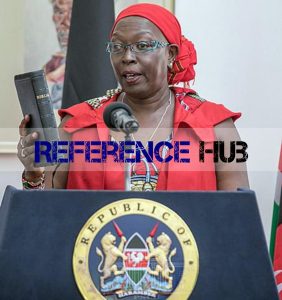
Betty Maina was born on March 4, 1975, in Murang’a County, Kenya. She grew up in a family that valued education and discipline. Her early years in Murang’a shaped her interest in leadership and service. She attended local schools before pursuing higher education abroad. She later earned a Master of Science degree in Development Administration and Planning from University College London in 1998. Her academic background prepared her for roles in governance and development.
She began her career working in civil service and development organizations. She served as Chief Executive Officer of the Kenya Association of Manufacturers, where she promoted industrial growth and supported private sector development. She also worked with international organizations, including the United Nations, in development-related roles. Her experience in both government and private institutions gave her a strong foundation in policy-making and economic planning.
Betty Maina rose to prominence when she was appointed Principal Secretary in the Ministry of Environment and Forestry. She later served as Principal Secretary in the Department of Industrialization, Trade, and Enterprise Development. Her leadership in these roles earned her recognition for advancing industrial growth and trade policies in Kenya.
In 2020, she was appointed Cabinet Secretary for Industrialization, Trade, and Enterprise Development by President Uhuru Kenyatta. In this position, she focused on supporting small and medium enterprises, strengthening manufacturing, and expanding trade opportunities. She worked closely with both government and private sector stakeholders to promote Kenya’s industrialization agenda.
Her achievements include shaping policies that encouraged investment, supporting local industries, and promoting Kenya’s participation in regional and international trade. She became known for her ability to balance policy with practical solutions for businesses. Her work contributed to Kenya’s economic growth and positioned her as one of the most impactful female leaders in the country.
Betty Maina is married and maintains a private family life. She is respected for her humility and dedication to public service. Her success is measured not only by her official positions but also by the influence she has had on Kenya’s economy and governance. Her estimated net worth is in the millions, reflecting her long career in leadership and public service.
She continues to serve in government, focusing on industrialization and trade development. Her legacy is tied to her role in advancing Kenya’s economic agenda and inspiring women in politics and governance. Betty Maina remains a key figure in Kenya’s leadership, admired for her resilience, professionalism, and commitment to national development.
Betty Maina Academic Foundation and Global Development Learning
Betty Maina built her intellectual framework through a combination of local and international scholarship. Her academic journey began in Murang’a County, where she attended primary and secondary institutions that emphasized community leadership and disciplined study. These early years provided the grounding necessary for her to excel at the University of Nairobi. She graduated with a Bachelor of Arts in Land Economics, a degree that introduced her to the complexities of resource management and urban planning within the Kenyan context.
To further her expertise, she moved to London to pursue advanced studies at University College London. In 1998, she earned a Master of Science in Development Administration and Planning. This international exposure was transformative, as it allowed her to study global economic systems and governance strategies. The curriculum focused on how developing nations can effectively structure their public sectors to promote sustainable growth. This specialized training became the cornerstone of her later work in the civil service. By blending her understanding of Kenyan land issues with British development theory, she developed a unique perspective on policy. This educational background effectively prepared her to navigate the high-stakes environments of the United Nations and the Kenyan Cabinet.
Betty Maina Professional Trajectory and Private Sector Leadership
Betty Maina began her career path in the non-profit and development sectors, focusing on economic advocacy. One of her most defining early roles was as the Chief Executive of the Institute of Economic Affairs (IEA). During her tenure from 1997 to 2003, she led research initiatives that influenced national policy discussions. Following this, she took the helm of the Kenya Association of Manufacturers (KAM). For eleven years, she served as the primary voice for the country’s industrial sector. Her work at KAM involved negotiating with government officials to create a more favorable business environment for local producers.
Her influence extended onto the global stage through significant appointments. She served as a member of the United Nations Secretary-General’s High-Level Panel on the Post-2015 Development Agenda. This role placed her at the center of international efforts to define future sustainable development goals. Additionally, she contributed to the Danish Prime Minister’s Africa Commission, where she collaborated with other eminent African figures to improve development cooperation. These experiences in the private sector and international organizations established her reputation as a formidable leader. She was seen as someone who could bridge the gap between corporate interests and public welfare. Her ability to manage complex organizations made her an obvious choice when the government began looking for experienced professionals to lead key state departments.
Betty Maina Political Elevation and Ministerial Influence
Betty Maina transitioned into the highest levels of government service when she was appointed as a Principal Secretary in 2015. Initially, she served in the State Department of East African Affairs, where she focused on regional integration and cross-border trade. Her performance led to subsequent appointments in the Ministry of Environment and Forestry and the Department of Industrialization. In these roles, she was recognized for her hands-on approach and her ability to implement large-scale administrative reforms. Her rise was steady, characterized by a focus on measurable results rather than political theater.
The peak of her public service came in 2020 when President Uhuru Kenyatta appointed her as the Cabinet Secretary for Industrialization, Trade, and Enterprise Development. Taking office during a global pandemic, she was immediately tasked with protecting Kenya’s manufacturing base from economic shocks. She became a central figure in the “Buy Kenya, Build Kenya” campaign, urging citizens and government agencies to support local industries. Her leadership was marked by a commitment to data-driven policy and a deep understanding of the challenges facing small and medium enterprises. Throughout her tenure, she remained a visible and influential member of the Cabinet, often representing Kenya in high-level trade negotiations. Her elevation to this position confirmed her status as one of the most trusted technocrats in the Kenyan government.
Betty Maina Strategic Initiatives for Industrial Growth
Betty Maina left a significant mark on the Ministry of Industrialization through several high-impact projects. She prioritized the development of Special Economic Zones (SEZs) and Export Processing Zones (EPZs) to attract foreign investment. By creating these industrial hubs, she aimed to increase the manufacturing sector’s contribution to the national GDP. One of her key successes was the gazettement of public and private SEZs, which provided tax incentives and improved infrastructure for businesses. She also focused on revitalizing specific sub-sectors like leather, textiles, and agro-processing, which were identified as priority areas for job creation.
Beyond physical infrastructure, she advocated for the finalization of the SME Policy. This framework was designed to address the chronic lack of credit and market access for small-scale traders. She frequently met with industry leaders to discuss how to reduce the cost of energy, which is a major hurdle for Kenyan manufacturers. Her work also included strengthening the legal fight against counterfeit goods, which she argued were draining billions from the economy. By coordinating efforts between different government agencies, she sought to protect local manufacturers from unfair competition. These initiatives were not just about policy; they were practical steps intended to make Kenya a more competitive player in the global market. Her focus on “Buy Kenya, Build Kenya” remains a defining aspect of her administrative legacy.
Betty Maina Public Service Dedication and Personal Context
Betty Maina is widely recognized for her disciplined lifestyle and her commitment to the values of the public sector. Born in Murang’a County into the Kikuyu community, she has always maintained a strong connection to her roots. Despite her high-profile roles, she is known for her humility and her ability to communicate effectively with people from all walks of life. This community grounding has made her a respected figure in regional politics, particularly in Central Kenya. She is often described as a role model for aspiring female leaders, demonstrating that professional excellence can lead to the highest levels of political influence.
In her personal life, she has navigated both triumphs and challenges with a sense of dignity. She is married to Eric Wamumbi, the Member of Parliament for Mathira, making them one of the most prominent political couples in the country. This partnership has occasionally put them in the media spotlight, but she has consistently focused the conversation back on her work for the Kenyan people. She is a mother of two children from a previous relationship and has spoken candidly about the importance of family support in her career. Her ability to balance the demands of a Cabinet position with her responsibilities as a parent and spouse has earned her widespread admiration. Her personal journey reflects the resilience and tenacity that she brings to her professional responsibilities.
Betty Maina Financial Standing and Economic Success
Betty Maina has achieved substantial financial success throughout her decades-long career in the corporate and public sectors. During her vetting for the Cabinet position in 2020, her net worth was officially estimated at approximately KES 150 million. This wealth was primarily accumulated through her long tenure at the Kenya Association of Manufacturers and various consultancy roles. Her background as a Chief Executive in the private sector allowed her to build a solid financial foundation before she entered the civil service. She has also disclosed interests in farming and other private investments, which contribute to her overall economic stability.
Her success is often measured by the influence she has wielded rather than just her bank balance. As a high-ranking government official, she has overseen budgets worth billions and shaped the economic future of the nation. Her financial transparency during the vetting process was seen as a sign of her integrity and commitment to public accountability. In a political landscape where wealth is often scrutinized, she has maintained a reputation for being a clean and ethical leader. Her net worth is viewed by many as a reflection of her hard work and her ability to excel in both the private and public spheres. This economic standing provides her with the independence to focus on long-term policy goals without being swayed by short-term political pressures.
Betty Maina Enduring Impact on Governance and Trade
Betty Maina’s legacy is defined by her role as a transformative leader in Kenya’s industrial landscape. She will be remembered as the woman who led the Ministry of Trade through one of the most challenging economic periods in modern history. Her emphasis on local manufacturing has changed the national conversation about self-reliance and economic independence. By championing the “Buy Kenya, Build Kenya” philosophy, she has helped create a more sustainable path for future industrial growth. Her work in establishing Special Economic Zones has laid a foundation that will likely benefit the country for decades.
As a mentor, she has inspired a new generation of women to pursue careers in governance and economic planning. Her career path proves that technical expertise and a results-oriented mindset are valuable assets in the political arena. Many believe that her influence will continue to be felt as she remains active in policy-making and regional development circles. Her future prospects include potential roles in international organizations or continued leadership within the Kenyan government. Regardless of her next steps, her contribution to the expansion of Kenya’s trade networks and the strengthening of its industrial base is undeniable. She has set a high standard for what a Cabinet Secretary can achieve through dedication and strategic vision.
Betty Maina Age (Tracking the progression of a distinguished public career)
Betty Maina was born in 1988 in Murang’a County, Kenya. As of January 2026, Betty Maina age is 37 years old.
Betty Maina Husband (Insight into the marital and domestic sphere)
Betty Maina is married to Eric Wamumbi. Her husband serves as the Member of Parliament for the Mathira constituency. The couple formalized their union in a traditional wedding ceremony held in November 2023. They are noted for being the first pair of elected legislators in Kenya to serve as a married couple.
Betty Maina Children (Examining the next generation and family legacy)
Betty Maina has two children from her previous marriage. Her children consist of one son and one daughter. The names of the children have not been publicly disclosed by the legislator. She shares parenting responsibilities for them with her current husband Eric Wamumbi.
Betty Maina Tribe (Contextualizing the cultural and ancestral heritage)
Betty Maina belongs to the Kikuyu tribe. She hails from Murang’a County in the Central region of Kenya. Her ethnic background is rooted in the Gikuyu people of the Mount Kenya highlands.
Betty Maina Profile Table (A rapid digest of core biographical indicators)
| Profile | Information |
| Betty Maina career | Politician and Former Cabinet Secretary |
| Betty Maina real name | Betty Chemutai Maina |
| Betty Maina age | 58 |
| Betty Maina date of birth | 1967 |
| Betty Maina net worth | KES 150 million |
| Betty Maina wife / spouse | Eric Wamumbi |
| Betty Maina children | Two |
| Betty Maina parents | Not known |
| Betty Maina religion | Not known |
| Betty Maina state of origin | Murang’a County, Kenya |
| Betty Maina alma mater | University College London |
| Betty Maina education | MSc in Development Administration and Planning |
| Betty Maina nationality | Kenyan |