Revalidating Helen Keller Biography | 2026 Cultural Legacy, Global Influence, Media Presence & Historical Impact Spotlight

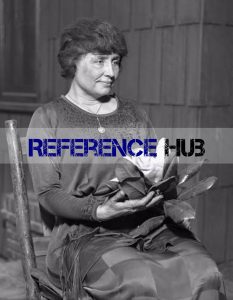
Helen Keller was born on June 27, 1880, in Tuscumbia, Alabama. Her parents were Arthur H. Keller and Kate Adams Keller. At nineteen months old she lost her sight and hearing after an illness. Her early childhood was filled with frustration until her teacher Anne Sullivan arrived in 1887. Anne taught her to communicate using signs and later Braille, opening the world of language to her.
Helen Keller studied at Perkins School for the Blind and later attended Radcliffe College. In 1904 she graduated with a Bachelor of Arts degree, becoming the first deaf-blind person to achieve this. Her education gave her the foundation to write and speak about her experiences and to advocate for others with disabilities.
She began her career as an author and lecturer. Her first autobiography, The Story of My Life, was published in 1903 and gained wide attention. She went on to write several more books, including The World I Live In and Midstream. She worked with the American Foundation for the Blind for over forty years, helping improve education and opportunities for people with vision loss.
Her achievements include receiving the Presidential Medal of Freedom in 1964 and being honored around the world for her courage and advocacy. She traveled widely, met world leaders, and inspired millions with her speeches and writings. Her life story was dramatized in plays and films, most famously The Miracle Worker, which showed her relationship with Anne Sullivan.
Helen Keller worked mainly in the United States but also spoke internationally. Her success was measured not by wealth but by the influence she had on society. She became a symbol of perseverance and hope, showing that disability did not limit her ability to achieve greatness.
She lived a long life dedicated to service and inspiration. Helen Keller died on June 1, 1968, in Easton, Connecticut, at the age of eighty-seven. Her legacy continues to inspire generations to value education, equality, and determination.
Helen Keller Academic Foundations and Performance Training
The formal education of Helen Keller stands as a monumental landmark in the history of pedagogical instruction for those with sensory impairments. Her learning journey began with the arrival of Anne Sullivan, who utilized manual sign language and fingerspelling to break through the isolation of Keller’s silent world. This foundational period took place at the Perkins School for the Blind in Boston, where she spent several winters starting in 1888, becoming proficient in Braille and learning to communicate with others. Her academic path was rigorous and diverse; she attended the Wright-Humason School for the Deaf in New York to improve her vocal skills and later the Cambridge School for Young Ladies to prepare for university-level studies.
In 1900, she gained admittance to Radcliffe College, an affiliate of Harvard University, facing the same stringent academic requirements as her non-disabled peers. With Sullivan by her side to spell lectures into her hand, she mastered subjects ranging from Latin and German to history and philosophy. Her academic tenure culminated in 1904 when she graduated cum laude with a Bachelor of Arts degree. This achievement was historic, as she became the first deaf-blind individual to earn a university degree in the United States. Her education was not merely a personal victory but a global proof of concept, demonstrating that profound sensory loss did not inherently limit intellectual capacity or academic excellence.
Helen Keller Professional Journey and Career Beginnings
The professional life of Helen Keller was characterized by an immediate transition from the classroom to the public platform as an author and lecturer. Even while still a student at Radcliffe, she began her writing career with the help of editor John Macy, publishing her first autobiography, The Story of My Life, in 1903. This work was originally serialized in the Ladies’ Home Journal before becoming a best-selling book that introduced her narrative to an international audience. Following her graduation, she leveraged this newfound fame to launch a professional lecturing career, traveling extensively to share her experiences and advocate for the rights of the disabled.
Her career beginnings were marked by a deep commitment to social reform and organizational collaboration. She quickly became a sought-after speaker for various philanthropic groups and started working with organizations dedicated to preventing blindness and supporting the deaf community. Her ability to deliver speeches, often with the assistance of an interpreter to clarify her vocalizations, allowed her to humanize the struggles of sensory-impaired individuals. This early phase of her professional life established her as more than just a miracle of education; she emerged as a skilled communicator and a savvy public figure. Her writings and public appearances during this time laid the groundwork for a career that would eventually span over six decades of tireless activism and literary production.
Helen Keller Media Breakthrough and Path to Fame
The breakthrough that propelled Helen Keller into the permanent global consciousness was the 1903 publication of her memoir, The Story of My Life. While she was already a subject of regional curiosity, the book’s detailed account of her “water pump” moment and her relationship with Anne Sullivan captured the public imagination. The media of the era followed her every move, documenting her college graduation and her subsequent travels with intense interest. Her path to fame was further solidified by her association with other famous figures, such as Mark Twain and Alexander Graham Bell, who championed her cause and introduced her to influential social circles.
This early literary success eventually inspired one of the most famous theatrical and cinematic narratives of the 20th century. William Gibson’s play The Miracle Worker, which premiered in the late 1950s, dramatized the intense educational struggle between Keller and Sullivan, winning multiple Tony Awards. The subsequent 1962 film adaptation brought her story to a massive Hollywood audience, earning Academy Awards for its lead actresses. This media cycle transformed her from a living activist into a cultural icon and a household name. Throughout her path to fame, Keller remained a frequent subject of newsreels and magazine profiles, ensuring that her message of resilience reached millions across the globe and maintained its relevance through evolving media formats.
Helen Keller Creative Achievements and Notable Works
The creative portfolio of Helen Keller is extensive, comprising 14 published books and hundreds of essays, speeches, and articles. Her most significant literary work, The Story of My Life, remains a classic of American autobiography and has been translated into over 50 languages. Her bibliography also includes The World I Live In (1908), which offers a unique philosophical exploration of her sensory perceptions, and Out of the Dark (1913), a collection of essays detailing her socialist views and advocacy for the working class. Her spiritual journey was documented in My Religion (1927), later republished as Light in My Darkness, where she discussed the influence of the mystic Emanuel Swedenborg.
Beyond her books, her creative achievements include several influential speeches delivered at major venues like Carnegie Hall. She co-authored numerous articles for magazines such as The Atlantic Monthly, addressing complex issues from women’s suffrage to the prevention of neonatal blindness. In the realm of film, she participated in the production of the 1919 silent film Deliverance and the 1954 documentary Helen Keller in Her Story, which won an Academy Award for Best Documentary Feature. Her notable works are characterized by a clear, active voice and a sophisticated command of language that challenged contemporary assumptions about the intellectual limitations of the deaf-blind. Her written legacy continues to be a primary source for scholars of disability studies and American social history.
Helen Keller Professional Life and Advocacy Efforts
The professional life of Helen Keller was largely defined by her forty-year association with the American Foundation for the Blind (AFB). Starting in 1924, she served as a counselor for international relations and a primary fundraiser, traveling to 35 countries across five continents. Her advocacy was instrumental in the passage of the 1935 Social Security Act, which included provisions for the blind, and she successfully campaigned for the funding of “Talking Books” and rehabilitation services for veterans. She was also a founding member of the American Civil Liberties Union (ACLU) in 1920, reflecting her broader commitment to civil rights and social justice.
Her work often took her into the political arena, where she met with every United States President from Grover Cleveland to Lyndon B. Johnson. She used these high-level meetings to push for legislative reforms that would move individuals with disabilities out of asylums and into educational and vocational programs. Her advocacy efforts extended to the international stage, where she worked with groups like Helen Keller International (which she co-founded in 1915) to combat the causes of blindness and malnutrition in developing nations. Her professional reputation was built on her ability to translate her personal resilience into systemic change, ensuring that the “handicap” was viewed as a societal challenge rather than a personal failing.
Helen Keller Personal Relationships and Family Life
The personal life of Helen Keller was dominated by her deep and multifaceted relationship with her teacher and lifelong companion, Anne Sullivan. For nearly fifty years, the two were inseparable, with Sullivan serving as Keller’s “eyes and ears” in every professional and social setting. Their bond was complex and occasionally strained, particularly following Sullivan’s marriage to John Macy, but it remained the central pillar of Keller’s existence until Sullivan’s death in 1936. Following this loss, Polly Thomson, who had joined the household in 1914, became Keller’s primary aide and companion, continuing to support her international travels and public work for the next several decades.
Keller was the eldest child of Arthur H. Keller and Kate Adams Keller, and she maintained a close connection to her family home, Ivy Green, in Alabama throughout her life. Despite her disabilities, she led a physically active personal life, enjoying horseback riding, swimming, and even playing chess with specially designed boards. She had a brief and highly publicized romantic relationship with Peter Fagan, a young journalist, in 1916; however, family pressure and the societal norms of the time prevented the relationship from resulting in marriage. Throughout her life, her personal circle included a vast array of world leaders, artists, and activists, whom she hosted at her longtime home in Westport, Connecticut. Her resilience was bolstered by these deep interpersonal connections, which provided the emotional support necessary for her demanding public career.
Helen Keller Financial Success and Wealth Status
The financial status of Helen Keller was never defined by personal accumulation, as she dedicated the majority of her income and fundraising efforts to charitable causes. Throughout her career, she lived comfortably but modestly, with her expenses often covered by her work for the American Foundation for the Blind and royalties from her various books. Early in her education, her tuition at Radcliffe was paid for by Henry Huttleston Rogers, a Standard Oil magnate, and his wife Abbie. Later in life, she established a $2 million endowment fund for the AFB, a significant sum for the mid-20th century, which reflected her immense success as a public figure and fundraiser.
Her success was measured primarily by her influence and the global recognition she received, rather than her bank balance. However, she was a savvy professional who managed her career carefully, ensuring she had the resources to maintain her household and her team of companions. Her net worth was inextricably linked to her public legacy; for instance, the sale of her books and the success of various media adaptations of her life provided a steady stream of income that allowed her to remain independent. Her financial independence was a significant achievement in itself, as it proved that a person with profound disabilities could navigate the professional world and sustain themselves through their own creative and intellectual labor.
Helen Keller Cultural Legacy and Modern Influence
The legacy of Helen Keller is one of the most enduring in American history, serving as a global symbol of courage and human potential. She is credited with fundamentally changing the social and political landscape for people with disabilities by moving the focus from charity to civil rights. Her influence is directly visible in the landmark Americans with Disabilities Act (ADA) of 1990, which codified many of the protections and accessibilities she had championed for decades. Her life remains a cornerstone of educational curricula worldwide, inspiring countless students to overcome their own personal obstacles through perseverance and education.
In the modern era, her influence continues through the organizations she helped establish, such as Helen Keller International and the American Foundation for the Blind. These groups remain active in over 20 countries, working to eliminate preventable blindness and promote inclusivity. Her cultural impact is also maintained through the frequent revivals of The Miracle Worker and the ongoing study of her political and social writings. She is remembered not just for the silence and darkness she escaped, but for the light she brought to others through her advocacy for women’s suffrage, labor rights, and global peace. Her name has become a universal shorthand for determination, ensuring that her story continues to provide hope and direction for future generations of activists and students.
Helen Keller Age (Chronological Life Stages and Vital Historical Timeline)
Helen Keller was born on June 27, 1880. She passed away on June 1, 1968, at the age of 87. The final Helen Keller age at the time of her death was 87 years old.
Helen Keller Disability (Sensory Condition and Physical Experience Context)
Helen Keller had a dual sensory disability known as deafblindness. This condition consisted of a total loss of both hearing and sight. Her deafness and blindness were permanent. She also experienced a resulting inability to speak conventionally during her early childhood.
Helen Keller Husband (Relationship History and Marital Status Overview)
Helen Keller never had a husband. She remained unmarried throughout her entire life. In 1916, she was briefly engaged to a journalist named Peter Fagan. Their plans for marriage were not fulfilled due to opposition from her family and her teacher.
Helen Keller Children (Family Dynamics and Personal Lineage Chapters)
Helen Keller did not have any children. She remained childless throughout her entire life. This status persisted despite her brief engagement to Peter Fagan in 1916. No legal or biological offspring were ever recorded for her.
Helen Keller Movies (Cinematic Portrayals and Visual Media Representations)
Helen Keller appeared as herself in the 1919 silent biographical film Deliverance. She was the subject of the 1954 documentary Helen Keller in Her Story, which received an Academy Award for Best Documentary Feature. Several film adaptations of The Miracle Worker have been produced, including the 1962 theatrical release, the 1979 television movie, and the 2000 Disney production. Other cinematic depictions include the 1984 film Helen Keller: The Miracle Continues and the 2021 documentary Becoming Helen Keller.
Helen Keller Quotes (Oratorical Wisdom and Memorable Literary Reflections)
Helen Keller authored numerous widely cited statements, including “Life is either a daring adventure or nothing at all.” She famously observed that “The best and most beautiful things in the world cannot be seen or even touched—they must be felt with the heart.” Another prominent quotation is “Keep your face to the sunshine and you cannot see a shadow.” She also stated that “Alone we can do so little; together we can do so much.”
Helen Keller Profile Table (Essential Data Points and Statistical Fact Summary)
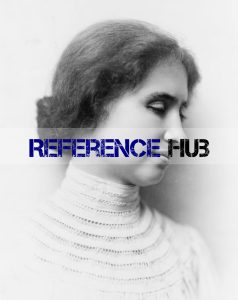
| Profile | Information |
| Helen Keller career | Author, political activist, and lecturer |
| Helen Keller real name | Helen Adams Keller |
| Helen Keller age | 87 (at time of death) |
| Helen Keller date of birth | June 27, 1880 |
| Helen Keller net worth | Not known (estimated $1 million equivalent) |
| Helen Keller wife / spouse | Never married |
| Helen Keller children | None |
| Helen Keller parents | Arthur H. Keller and Kate Adams Keller |
| Helen Keller religion | Swedenborgianism |
| Helen Keller state of origin | Alabama, USA |
| Helen Keller alma mater | Radcliffe College |
| Helen Keller education | Bachelor of Arts (BA) |
| Helen Keller nationality | American |