Reclaiming Frederick Douglass Biography | 2026 Cultural Legacy, Global Influence, Media Presence & Historical Impact Spotlight


Frederick Douglass was born in February 1818 in Talbot County, Maryland. His birth name was Frederick Augustus Washington Bailey. He was born into slavery and separated from his mother at a young age. His childhood was marked by hardship, but he showed determination to learn. He secretly taught himself to read and write, even though laws forbade enslaved people from gaining an education. Books and newspapers became his teachers, and literacy gave him the power to dream of freedom.
In 1838, Douglass escaped slavery by disguising himself as a sailor and traveling north. He settled in New Bedford, Massachusetts, and adopted the name Frederick Douglass. He worked as a laborer while attending abolitionist meetings. His talent as a speaker soon drew attention, and he began delivering powerful speeches against slavery. His words inspired many and made him a leading voice in the abolitionist movement.
In 1845, he published his first autobiography, Narrative of the Life of Frederick Douglass, an American Slave. The book gained international recognition and proved his courage in telling the truth about slavery. He later wrote My Bondage and My Freedom in 1855 and Life and Times of Frederick Douglass in 1881, which gave deeper insight into his journey. He also founded and edited The North Star, an abolitionist newspaper that spread ideas of freedom and equality.
Douglass worked closely with leaders of his time. He advised President Abraham Lincoln during the Civil War and later worked with President Ulysses S. Grant on civil rights issues. He also supported women’s suffrage and worked alongside activists like Susan B. Anthony. His career as an abolitionist, writer, and statesman made him one of the most respected figures of the nineteenth century.
He married Anna Murray in 1838, and together they raised five children. After Anna’s death, he married Helen Pitts in 1884, who shared his commitment to equality. His family life reflected his belief in love and justice across boundaries of race and gender.
Douglass achieved success not through wealth but through influence. His speeches, writings, and activism helped change the course of American history. He proved that courage and education could break the chains of oppression. His work took him across the United States and abroad, where he spoke to audiences about freedom and human rights.
Frederick Douglass died on February 20, 1895, in Washington, D.C., at the age of seventy-seven. His legacy lives on as a symbol of resilience and justice. His life story continues to inspire generations to fight for equality and to believe in the power of words and action.
Frederick Douglass Literacy Journey and Intellectual Growth
The path to literacy for Frederick Douglass began in the household of Hugh Auld in Baltimore, where Sophia Auld initially taught him the alphabet. Her husband eventually forbade these lessons, arguing that education made enslaved individuals unmanageable. This prohibition backfired, as it convinced the young Douglass that knowledge was the primary tool for liberation. He began a clandestine journey of self-education, often carrying a copy of The Columbian Orator to study whenever a brief moment of privacy allowed. His resourcefulness was unmatched; he frequently befriended local white children in the streets, trading pieces of bread for lessons on how to spell and read various words.
These secret efforts allowed him to engage with abolitionist literature and newspapers, which fundamentally reshaped his understanding of human rights. By the time he reached his late teens, he had not only mastered reading but also began teaching other enslaved people in secret Sunday schools. This intellectual defiance was met with severe punishment, yet he persisted in refining his oratory skills by practicing speeches from the books he had managed to obtain. His literacy became a potent weapon, enabling him to write his own protection passes during escape attempts. Ultimately, his commitment to learning provided the foundation for his future career as one of history’s most articulate and persuasive voices against the institution of slavery.
Frederick Douglass Professional Journey and Career Beginnings
The professional life of Frederick Douglass shifted dramatically following his successful escape from slavery in 1838. Settling in New Bedford, Massachusetts, he initially supported his family by working as a manual laborer, performing tasks such as caulking ships and loading coal. His entry into the public sphere occurred at an anti-slavery convention in Nantucket, where his powerful testimony about his experiences moved the audience to tears. This event launched his career as a professional lecturer for the Massachusetts Anti-Slavery Society. He traveled extensively across the North, using his voice to humanize the horrors of bondage and recruit new members to the abolitionist cause.
In 1845, his professional reach expanded globally with the publication of his first autobiography. To avoid recapture by his former masters, he embarked on a two-year speaking tour of Great Britain and Ireland, where he was hailed as a leading intellectual and statesman. Upon his return to the United States as a legally free man, he transitioned into the role of a publisher and editor. He founded The North Star in Rochester, New York, an influential newspaper that advocated for abolition and broader social reform. His career was a unique synthesis of public speaking, investigative journalism, and political organizing, establishing him as a central figure in American reform movements.
Jamie Foxx Rise in Fame and Public Recognition
The rise to international fame for Frederick Douglass was propelled by his extraordinary ability to communicate the lived reality of slavery to a wide audience. While his early speeches garnered local respect, it was the 1845 release of Narrative of the Life of Frederick Douglass, an American Slave that catapulted him into the global spotlight. The book became an immediate bestseller, selling 5,000 copies in its first few months and being translated into multiple languages. His articulate writing effectively countered the common racist assumption that an escaped slave could not possess such intellectual depth. This visibility made him the most photographed man of the 19th century, a status he used to project an image of Black dignity and power.
During the Civil War, his fame reached the highest levels of the American government. He became a trusted advisor to President Abraham Lincoln, advocating for the enlistment of Black soldiers and the immediate emancipation of all enslaved people. His public recognition grew further as he took on significant political appointments, including serving as the U.S. Marshal for the District of Columbia and the Minister to Haiti. By the end of his life, he was regarded as the “Sage of Anacostia,” a statesman whose name was synonymous with the struggle for justice. His rise to fame proved that personal narrative, when paired with moral conviction, could shift the conscience of a nation.
Frederick Douglass Creative Achievements and Notable Works
The creative legacy of Frederick Douglass is primarily anchored in his three influential autobiographies, which are considered cornerstones of American literature. Narrative of the Life of Frederick Douglass (1845) provided a visceral account of his escape, while My Bondage and My Freedom (1855) and Life and Times of Frederick Douglass (1881) offered deeper reflections on his political philosophy and international activism. These works played a critical role in the development of the “slave narrative” genre, using storytelling as a tool for political change. His creative output also included his work as a newspaper editor, where he published hundreds of editorials that shaped public debate on issues ranging from voting rights to economic independence.
His achievements also include his pioneering role in the women’s suffrage movement. As the only African American to attend the Seneca Falls Convention in 1848, he delivered a stirring speech that was instrumental in passing the resolution for women’s right to vote. His “What to the Slave Is the Fourth of July?” speech remains one of the most celebrated examples of American oratory, noted for its masterful use of irony and moral urgency. Throughout his life, he utilized diverse mediums—from books and newspapers to public lectures and diplomatic cables—to challenge systemic oppression. These notable works collectively demonstrate his genius for using language to dismantle the intellectual justifications for inequality.
Frederick Douglass Personal Relationships and Family Life
The personal life of Frederick Douglass was built on a foundation of resilience and shared commitment to the cause of freedom. He was married to Anna Murray, a free Black woman who played a vital role in his escape from slavery by providing the funds and the sailor’s disguise he used to travel North. Over their 44-year marriage, they raised five children: Rosetta, Lewis Henry, Frederick Jr., Charles Remond, and Annie. Anna managed the household and supported the family’s efforts on the Underground Railroad while Douglass was frequently away on speaking tours. Their children often worked alongside their father, helping to set type for his newspapers and serving in the military during the Civil War.
Following Anna’s death in 1882, Douglass entered a second marriage with Helen Pitts, a white suffragist and former employee. This union caused significant public controversy and tension within his own family due to its interracial nature. Despite the backlash, the couple remained dedicated to each other and to the ongoing fight for civil rights until his death. His home life, particularly at his Cedar Hill estate in Washington, D.C., was a center of intellectual activity and hospitality. His relationships were defined by a belief in equality that extended into his private sphere, where he encouraged his daughters and stepchildren to pursue their own educations and careers.
Frederick Douglass Financial Success and Wealth Status
Frederick Douglass achieved a level of financial stability and success that was extremely rare for an African American in the 19th century. His initial income as a free man came from manual labor, but his primary earnings eventually stemmed from his career as an author and a highly sought-after public speaker. The sales from his first autobiography provided the initial capital for his various business ventures, including his newspapers. During his two-year tour of the United Kingdom, his supporters raised enough money to purchase his legal freedom for $711.66, which allowed him to return to the U.S. without fear of being captured by his former enslavers.
By the end of his life, his financial status was substantial, with an estimated net worth of between $100,000 and $200,000—a fortune worth millions in today’s currency. This wealth was reflected in his ownership of the Cedar Hill mansion, a 14-room Victorian home on a 20-acre estate in Washington, D.C. He also served as the president of the Freedman’s Savings Bank, where he invested $10,000 of his own money in an attempt to stabilize the institution. His financial journey from an enslaved laborer to a wealthy statesman was a point of pride, as he often cited his own “self-made” success as evidence of the potential of all people when given the opportunity for freedom and education.
Frederick Douglass Cultural Legacy and Modern Influence
The cultural legacy of Frederick Douglass is one of unwavering courage and the power of the written word to effect social change. He is widely regarded as a symbol of the American spirit, representing the journey from oppression to total intellectual and political liberation. His life and writings continue to be a primary source of inspiration for activists, scholars, and leaders around the world. In the modern era, his speeches are frequently recited at Juneteenth celebrations and civil rights rallies, where his calls for “agitate, agitate, agitate” remain a guiding principle for social justice movements. His influence is also visible in the numerous schools, statues, and parks dedicated in his honor across the United States.
His legacy is also celebrated through the preservation of his historic home as a National Historic Site, which serves as a center for education and reflection. In 2018, a new statue of Douglass was unveiled in the U.S. Capitol, further solidifying his status as a foundational figure in American history. Modern writers and artists frequently draw upon his life for inspiration, exploring themes of identity, literacy, and resistance in contemporary literature and film. As movements for racial and gender equality continue to evolve, his vision of a truly egalitarian society provides both a historical benchmark and a future goal. He remains a powerful reminder that the fight for human rights is a continuous struggle that requires constant vigilance and loud, articulate voices.
Frederick Douglass Age (Chronological Lifecycle and Vital Historical Timeline)
Frederick Douglass was born in February 1818, choosing to celebrate his birthday on February 14. He passed away on February 20, 1895, at the age of 77. The specific Frederick Douglass age at his time of death is recorded as 77 years.
Frederick Douglass Quotes (Oratorical Wisdom and Memorable Literary Reflections)
Frederick Douglass famously declared: “If there is no struggle, there is no progress.” He also stated: “It is easier to build strong children than to repair broken men.” Another prominent quote is: “Power concedes nothing without a demand; it never did and it never will.” He similarly observed: “Where justice is denied, where poverty is enforced, where ignorance prevails, and where any one class is made to feel that society is an organized conspiracy to oppress, rob and degrade them, neither persons nor property will be safe.”
[Frederick Douglass holding a manuscript]
Frederick Douglass Wife (Domestic Life and Marital Partnership Chapters)
Frederick Douglass was married to two women during his lifetime. His first wife was Anna Murray, whom he married on September 15, 1838. Following her death in 1882, he married his second wife, Helen Pitts, on January 24, 1884. He remained married to Helen Pitts until his own death in 1895.
Frederick Douglass Parents (Ancestral Background and Early Lineage Foundation)
Frederick Douglass was the son of Harriet Bailey, an enslaved woman who worked as a field hand in Maryland. His mother traveled long distances on foot at night to visit him before her death when he was approximately seven years old. The identity of his father remains unconfirmed, though he was known to be a white man. Rumors persists that his father was his owner, Aaron Anthony, but no historical record provides definitive proof.
[Frederick Douglass as an elder statesman]
Frederick Douglass Books (Published Narratives and Written Intellectual Contributions)
Frederick Douglass authored several fundamental works, most notably his three autobiographies: Narrative of the Life of Frederick Douglass, an American Slave (1845), My Bondage and My Freedom (1855), and Life and Times of Frederick Douglass (1881, revised 1892). His bibliography also includes the novella The Heroic Slave (1853), which is recognized as one of the first works of African American fiction. He published numerous speeches and essays, such as “What to the Slave Is the Fourth of July?” (1852) and “Self-Made Men” (1859). Additionally, his written legacy comprises extensive editorials from his newspapers, including The North Star, Frederick Douglass’ Paper, and the New National Era.
Frederick Douglass Children (Family Dynamics and Multi-Generational Legacy Elements)
Frederick Douglass had five children with his first wife, Anna Murray Douglass. The children were Rosetta Douglass, Lewis Henry Douglass, Frederick Douglass Jr., Charles Remond Douglass, and Annie Douglass. His youngest daughter, Annie, died at the age of ten. He had no children with his second wife, Helen Pitts Douglass.
Frederick Douglass Profile Table (Essential Data Points and Statistical Biography Summary)
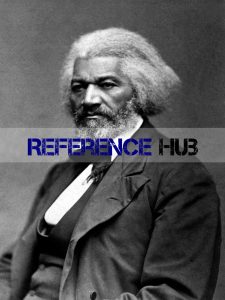
| Profile | Information |
| Frederick Douglass career | Abolitionist, writer, orator, and statesman |
| Frederick Douglass real name | Frederick Augustus Washington Bailey |
| Frederick Douglass age | 77 |
| Frederick Douglass date of birth | February 1818 |
| Frederick Douglass net worth | Estimated between $100,000 and $200,000 at death |
| Frederick Douglass wife / spouse | Anna Murray (1838–1882); Helen Pitts (1884–1895) |
| Frederick Douglass children | Rosetta, Lewis Henry, Frederick Jr., Charles Remond, Annie |
| Frederick Douglass parents | Harriet Bailey (Mother); Father unknown (white man) |
| Frederick Douglass religion | African Methodist Episcopal (AME) |
| Frederick Douglass state of origin | Maryland, USA |
| Frederick Douglass alma mater | Not known |
| Frederick Douglass education | Self-educated |
| Frederick Douglass nationality | American |